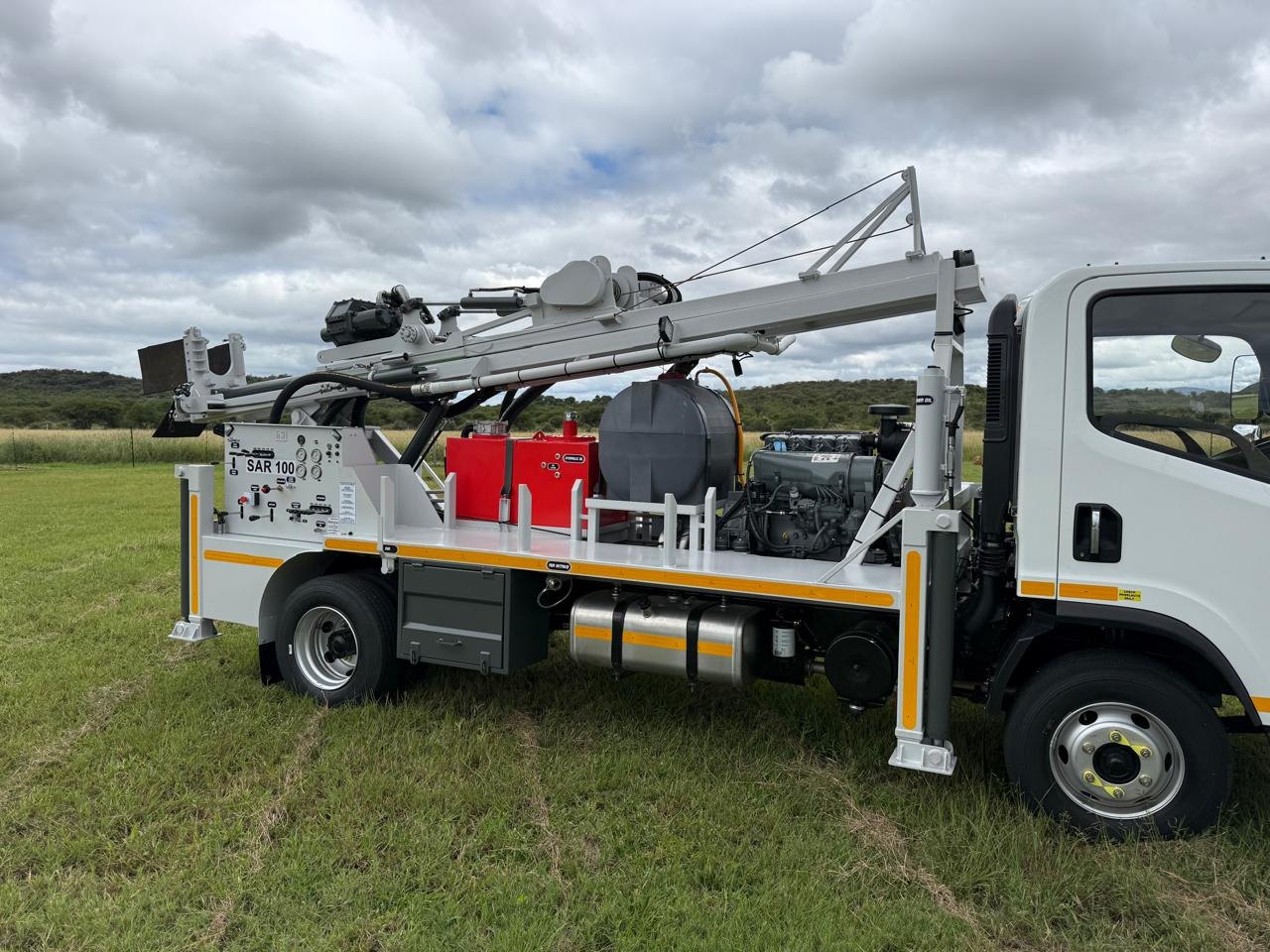
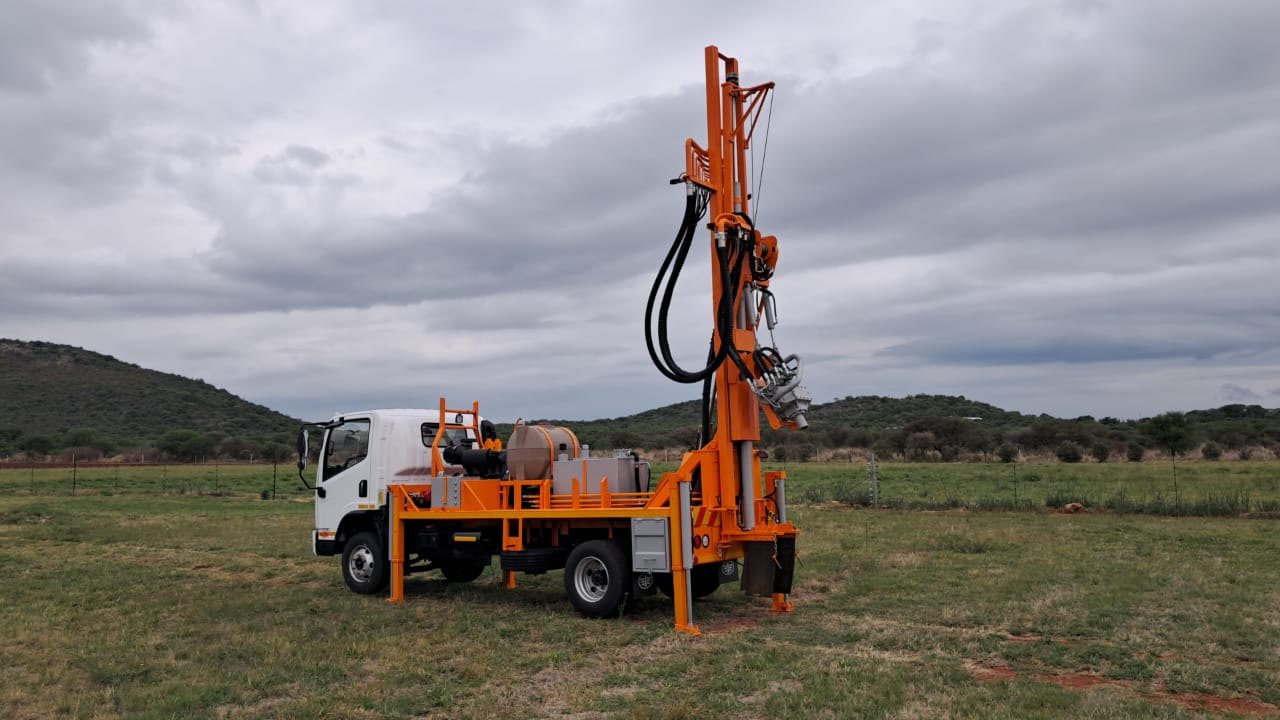
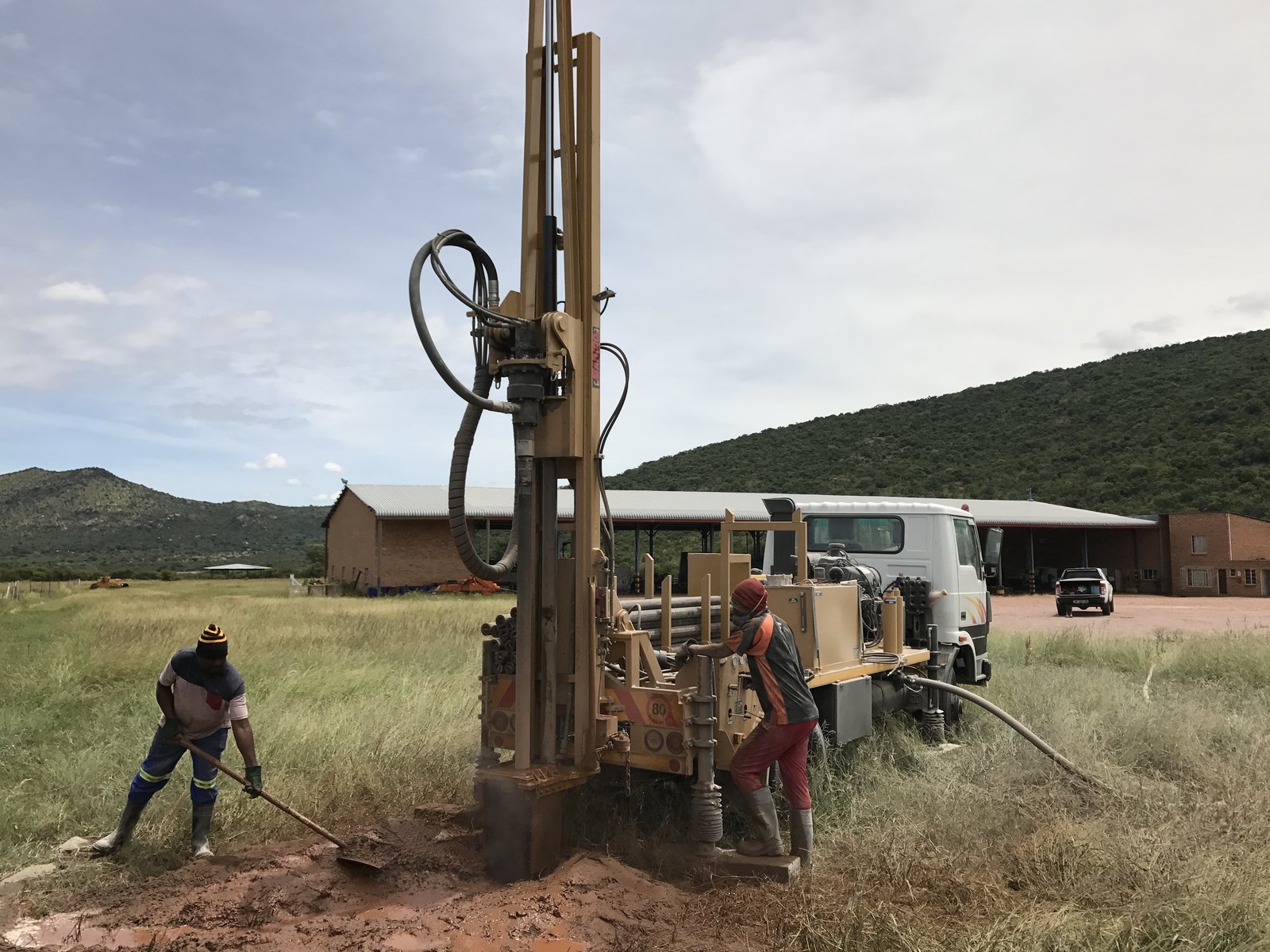
The SAR100 is our compact truck-mounted water well rig — the one that fits under a standard carport. This page shows how a SAR100 gets built, told the way we run every project: six phases, one gate at a time. The photos come from several recent SAR100 builds — different trucks, different colours, same process.
The Brief
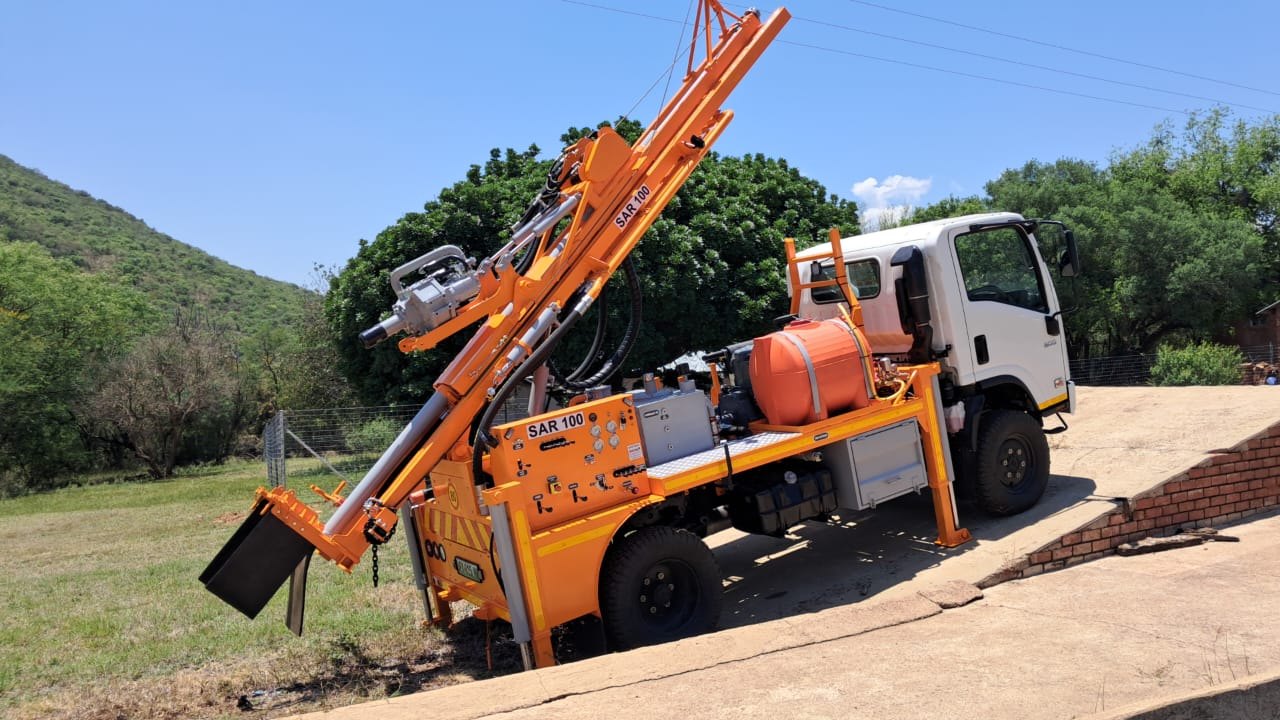
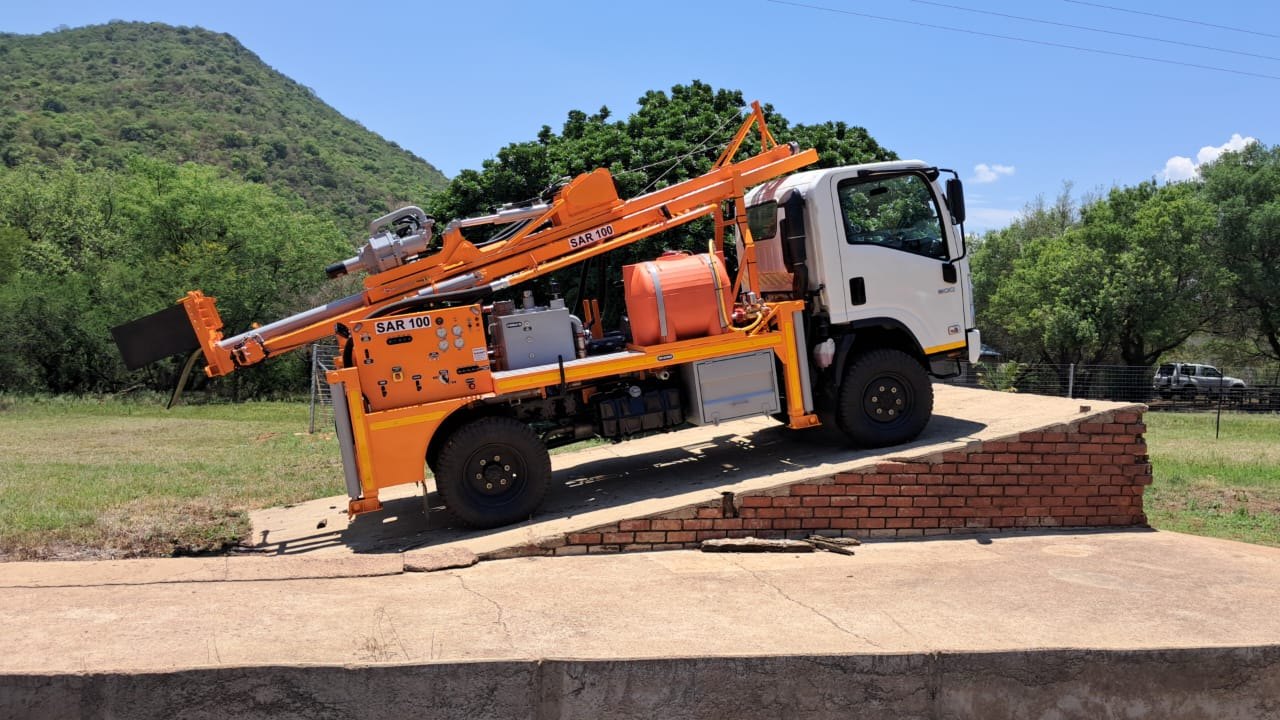
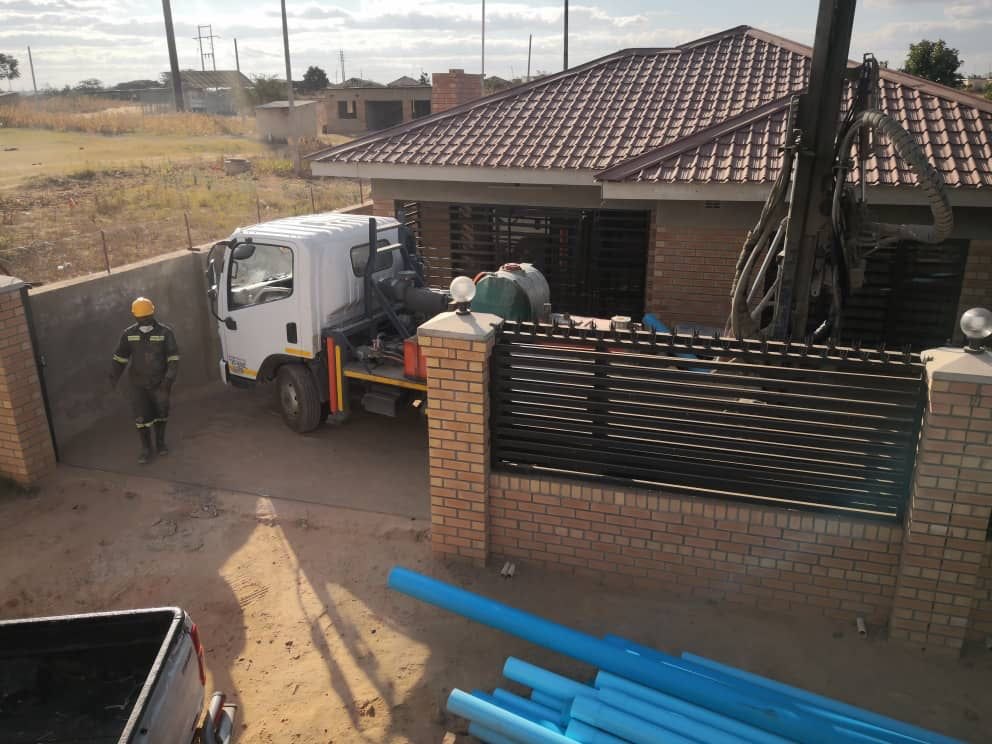
Every SAR100 starts with the same kind of conversation. Drilling contractors come to us with tight-access work — residential and small-commercial boreholes on stands with gates, walls, carports and overhead lines. A big rig either can't get in or wastes money standing outside. The SAR100 is the answer to that brief: a machine that drives into a suburban yard on its own wheels — a compact 4–6 ton truck — sets up in tight space, and still drills a proper borehole, DTH to 200 m with mud rotary when the ground asks for it. Phase A turns the conversation into a deal: discovery, a written quote with options and exclusions stated, then a signed quote and deposit. Gate A closed — the project officially exists.
The Goal
Before any steel moves, we write down what done looks like and both sides sign it. For a SAR100 the Definition of Done typically reads:
- A SAR100 mounted on a compact 4–6 ton truck — small enough for suburban streets and gates.
- DTH drilling to the rated 200 m, maximum diameter 8.75" with a 6" hammer; mud rotary capable.
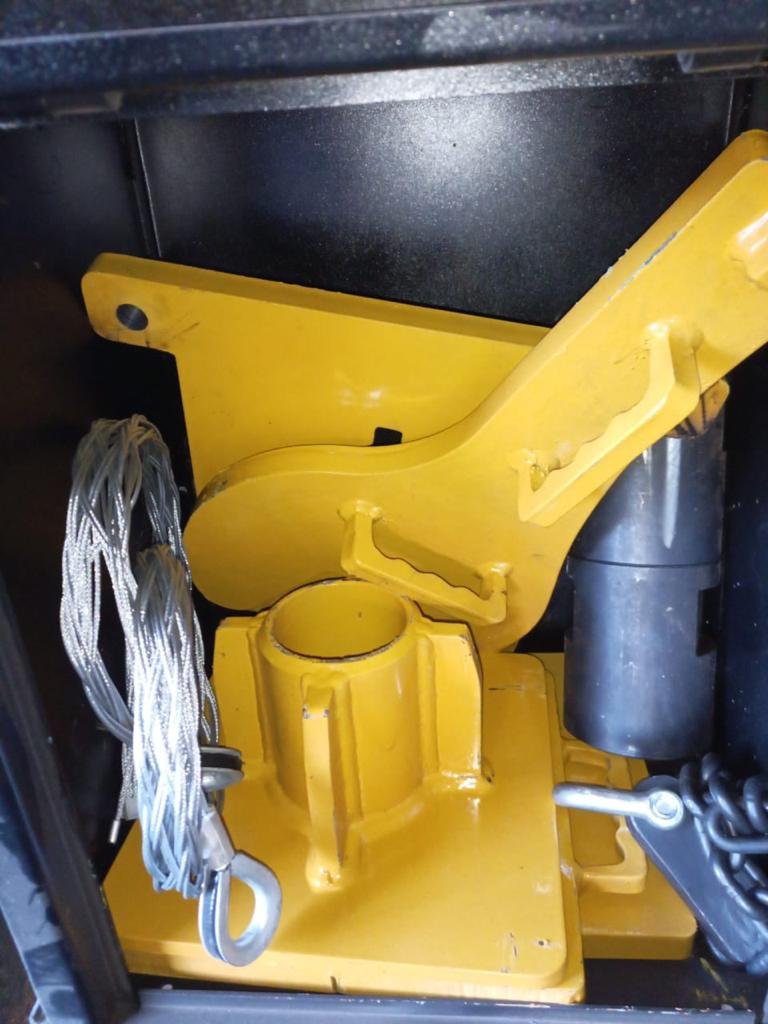
- Drill rods on board: 3 m rods, 2-3/8" API IF, 89 mm OD — up to 90 m carried on deck.
- Compressor as a separate trailer-mounted unit, keeping the truck light and manoeuvrable.
That signed document is the referee for the rest of the project. QC inspects against it. The customer accepts against it. Nothing vaguer will do.
The Design
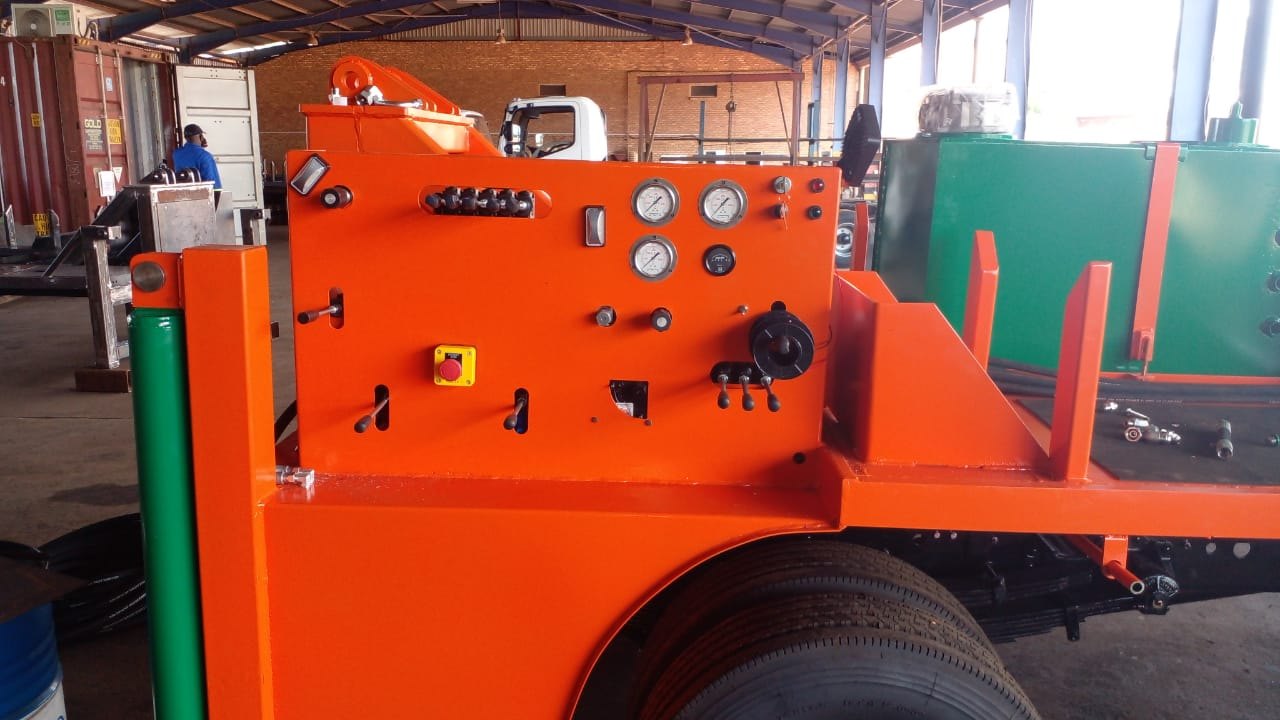
The SAR100 is a production design, proven over many builds, so this phase is usually a verification pass, not a clean-sheet exercise: confirm the manufacturing drawings are current, extract the bill of materials, and agree the truck with the customer. The numbers carry the machine. A 3.6 m-stroke feed cylinder with a 90 mm bore gives 11,127 kg of pull-back at the normal 175 bar working pressure. Rotational torque is 4,800 Nm. The head tilts hydraulically. Four hydraulic outriggers with 800 mm of stroke level the rig on uneven ground. Power comes from a Deutz F4L912 air-cooled diesel — 54 kW, no radiator to puncture, no electronics to chase in the field — driving a 3-stage gear pump. Production builds run on the standard drawings, so there are no clean-sheet renders to show here; the numbers stand in for the pictures.
The Preparation
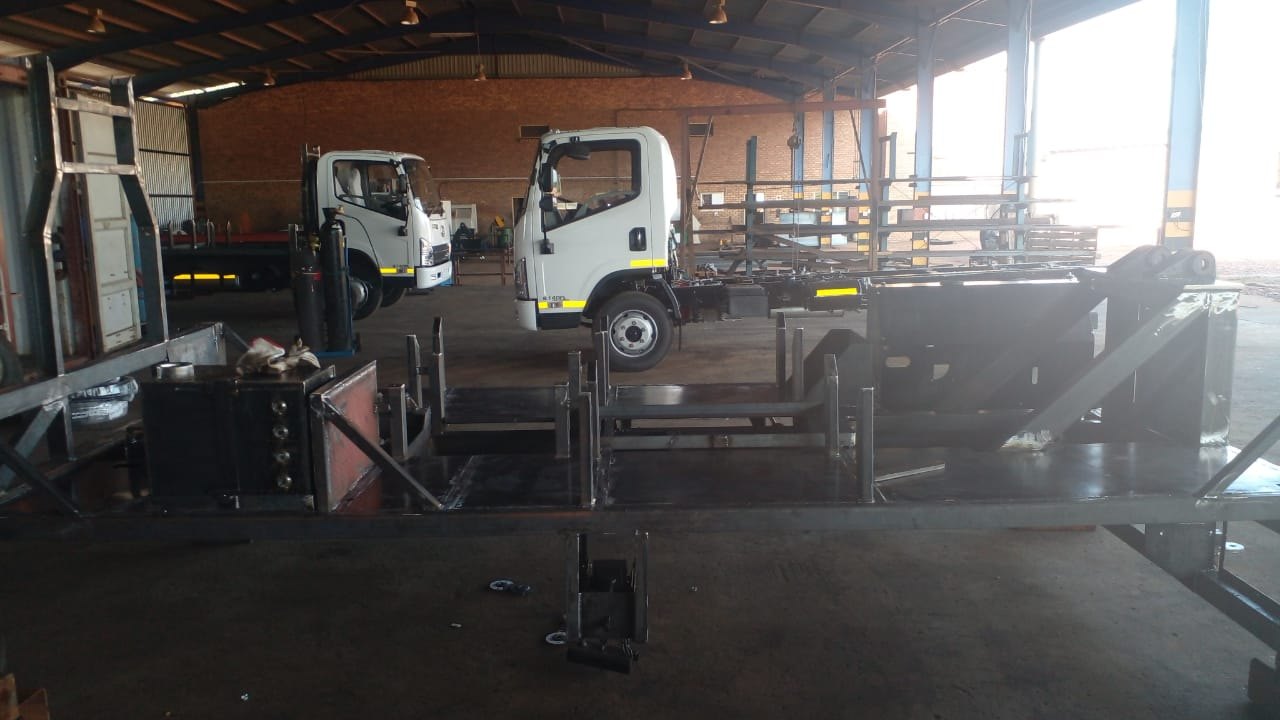
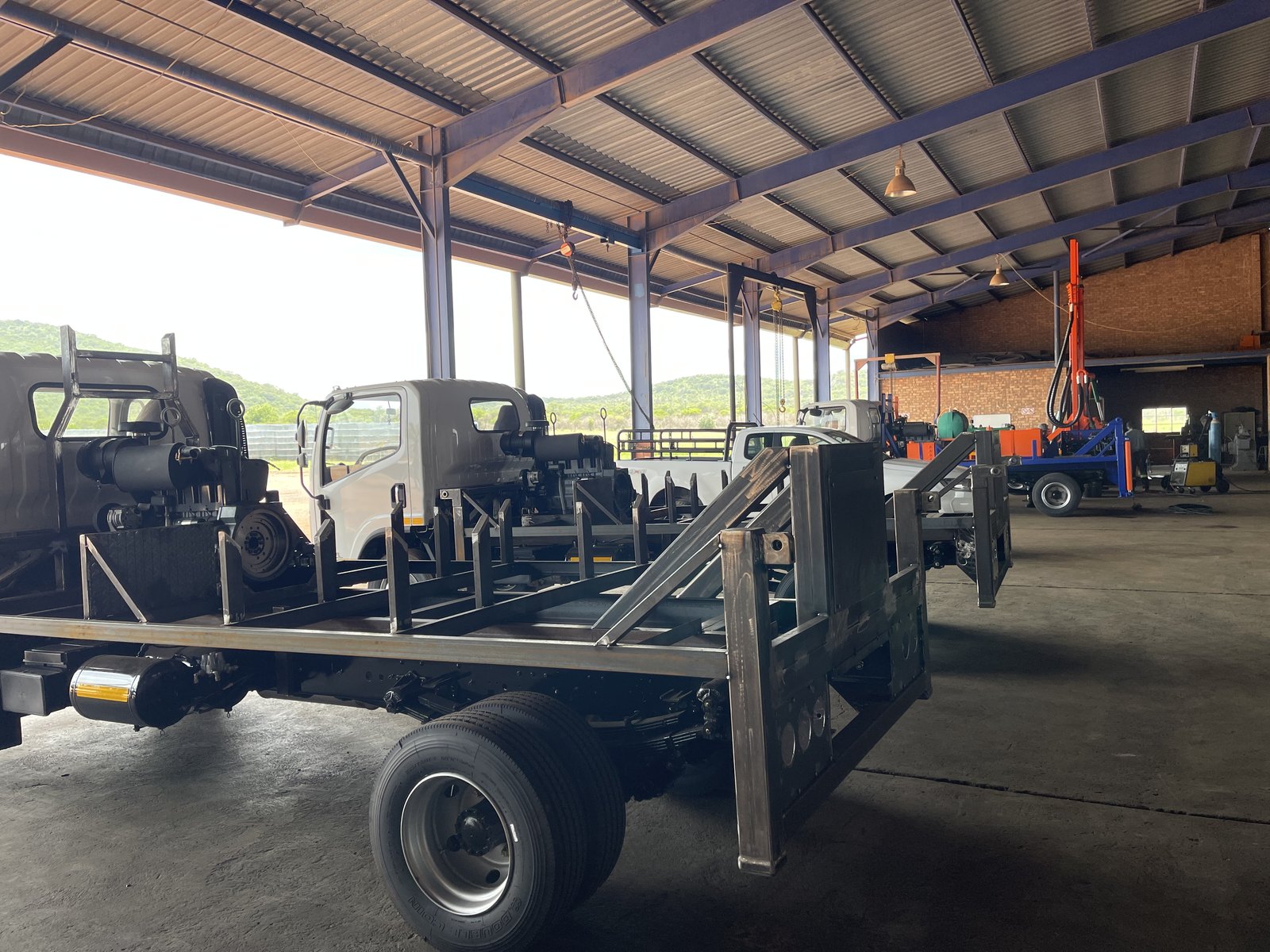
With the design signed off, the bill of materials goes up against stock in Odoo. What's on the shelf gets reserved. What isn't gets ordered — long-lead items first: the truck cab-chassis, the Deutz engine, the hydraulic cylinders. The build slot only opens once the critical parts are on the workshop floor, because a half-built rig waiting on parts blocks the bay and burns the schedule. This is what that stage looks like: bare cab-chassis trucks waiting for steel, and the rod-handling kit that ships in the deck toolbox — photographed here packed for a delivery.
The Build
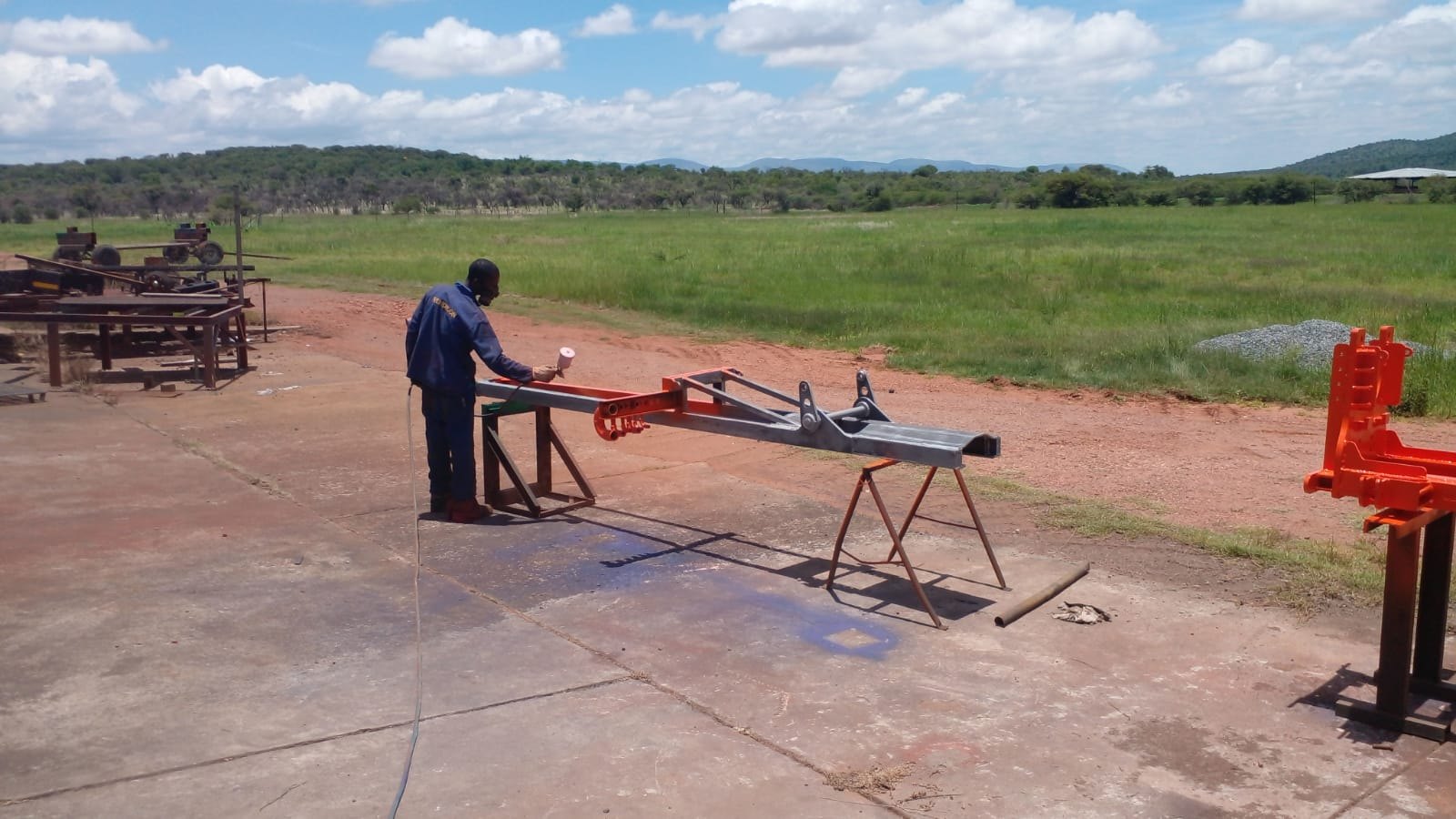
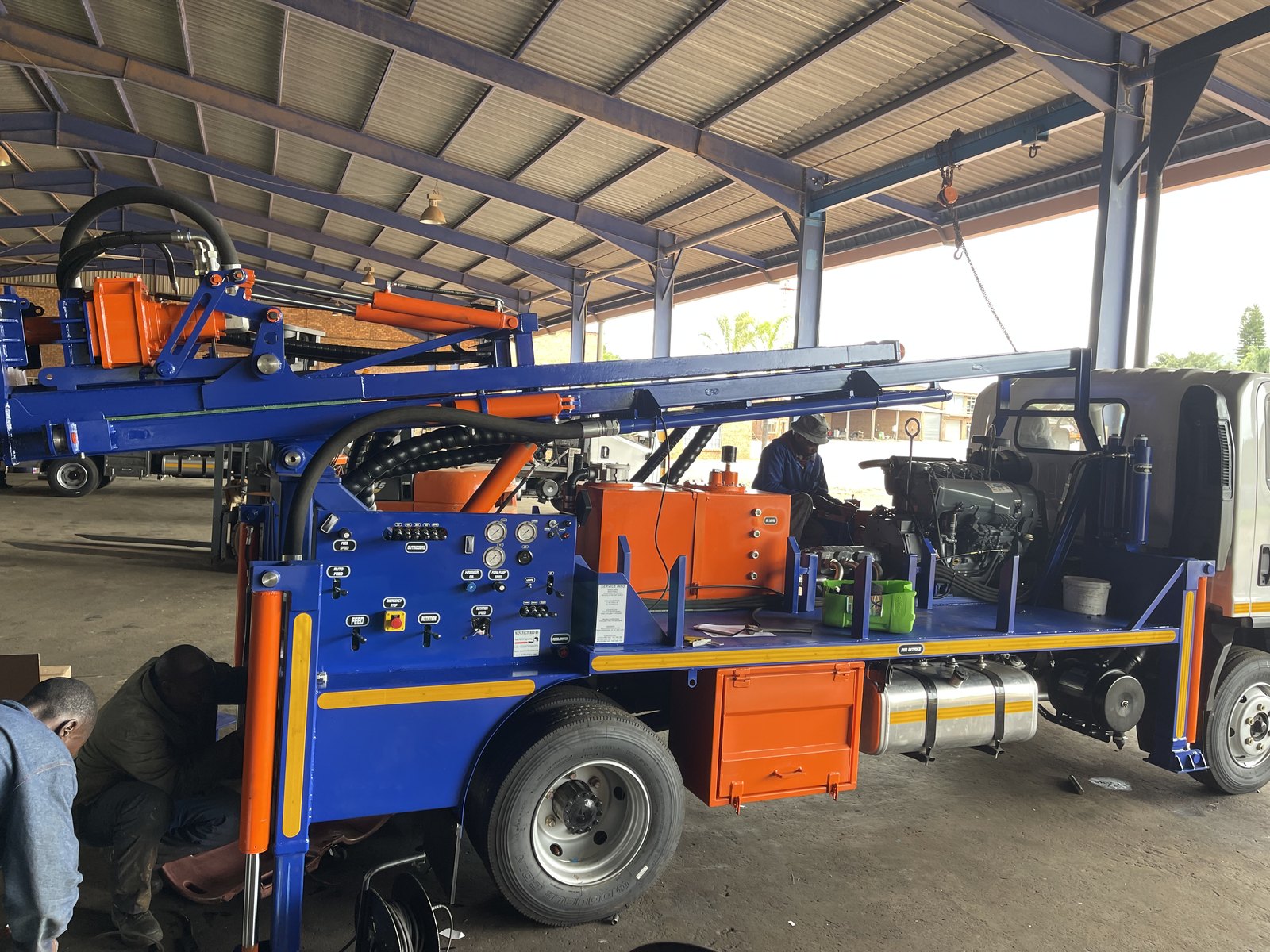
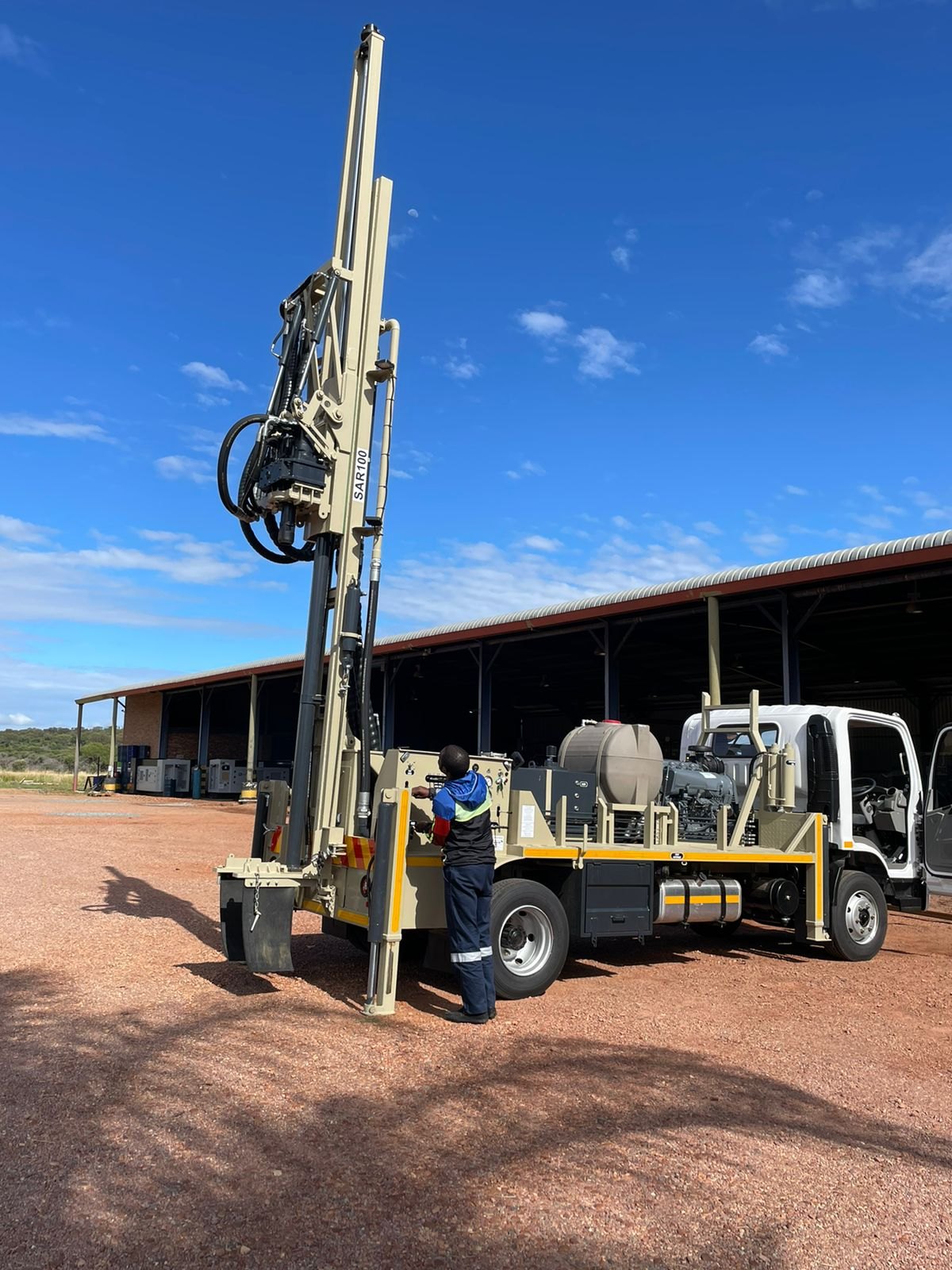
Fabrication first: loadbody frame, mast and sub-assemblies cut and welded in our Mokopane workshop. Then fitment — the mast with its 3.6 m-stroke feed cylinder, the rotation head, the hydraulic head tilt, the gear pump and control panel, the foam pump (21 litres per minute at 30 bar) with its venturi hammer-oil lubricator, and the four 800 mm outriggers. After that, surface treatment: sandblast, prime, paint, decals — the builds pictured on this page left the yard in white, orange and desert tan. Last comes testing — function tests and pressure tests on every hydraulic circuit, then a QC inspection against the signed Definition of Done. Rework continues until the snag list is empty. Nothing leaves the yard with an open snag.
The Handover
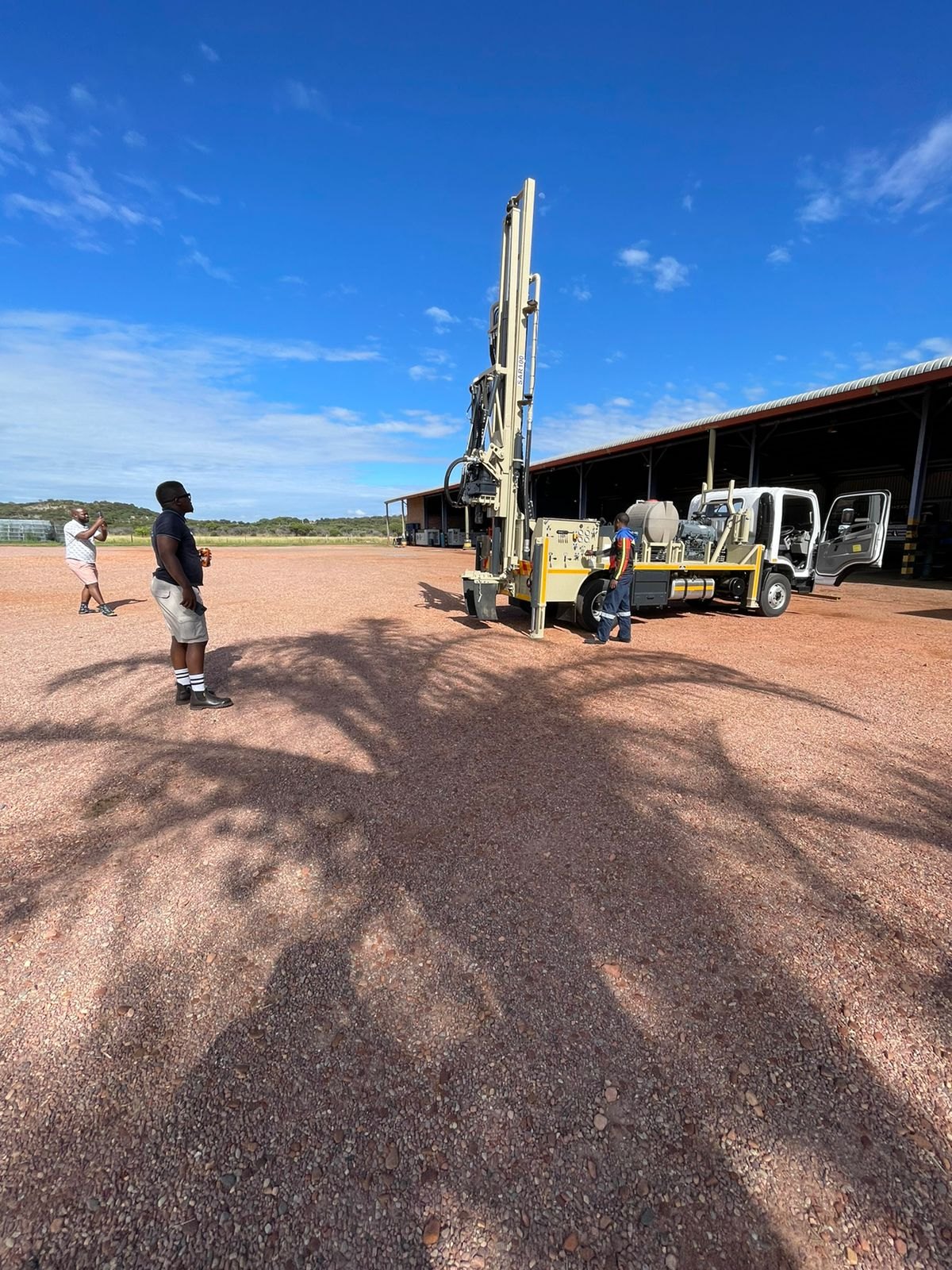
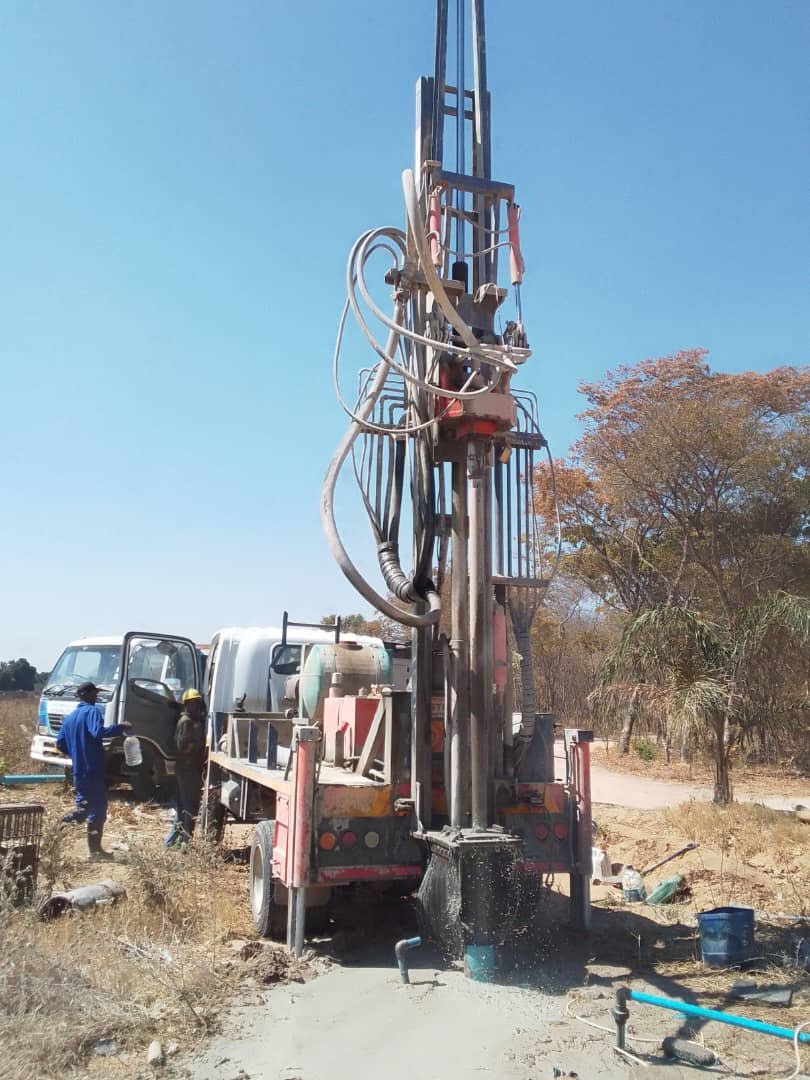
Delivery day is inspection day. The customer checks the rig against the Definition of Done, item by item, before final payment. Then training: the crew runs the controls under our instruction — raising the mast, setting the outriggers, tripping rods — until they are comfortable on their own machine. Support doesn't stop at the gate; the rig is built from standard, locally available parts and is field-serviceable, backed by the factory that has been building rigs in Mokopane since 1999. The video shows the work these rigs are bought for: a SAR100 on the job. And the last photo is the point of it all — a rig on site with a borehole delivering water.
Want one like this?
Talk to us about building a SAR100 for your operation. If a bakkie fits on your site, the SAR100 probably does too.
WhatsApp us on +27 83 854 2781 · See the SAR100 in the showroom