
On 2 June 2026, six solar piling rigs landed at our yard in Mokopane, fresh off the boat from China. Most dealers would have wiped them down, slapped on a sticker and pushed them out the gate. We don't work like that. We pulled every one of them into the workshop, stripped them down, and re-engineered them into something tougher and more operator-friendly: the JCS500 Solar Piling Rig. This is the story of what we changed, and why it matters on a real solar site.
They Arrived — Six Units in Three Containers
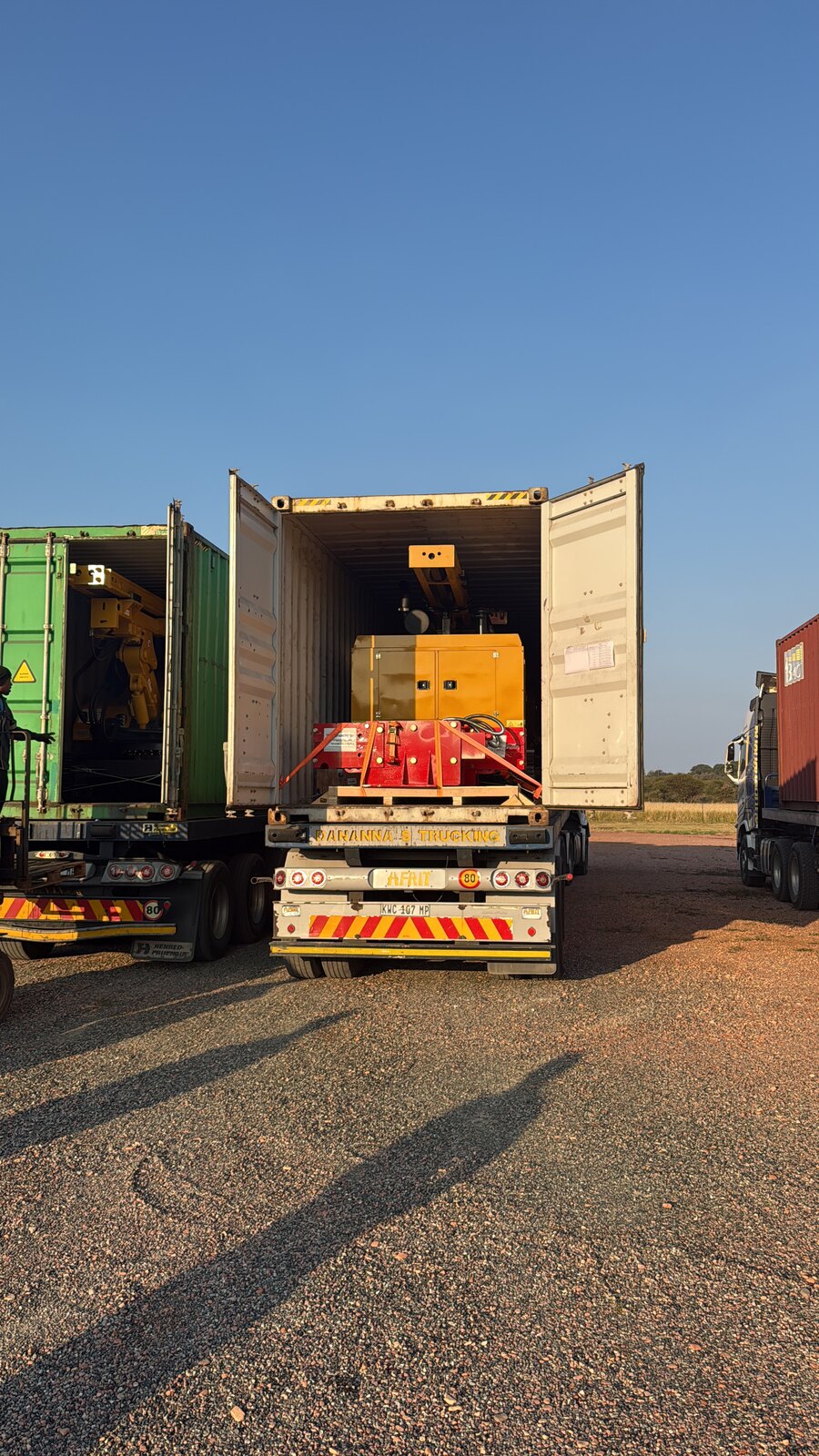
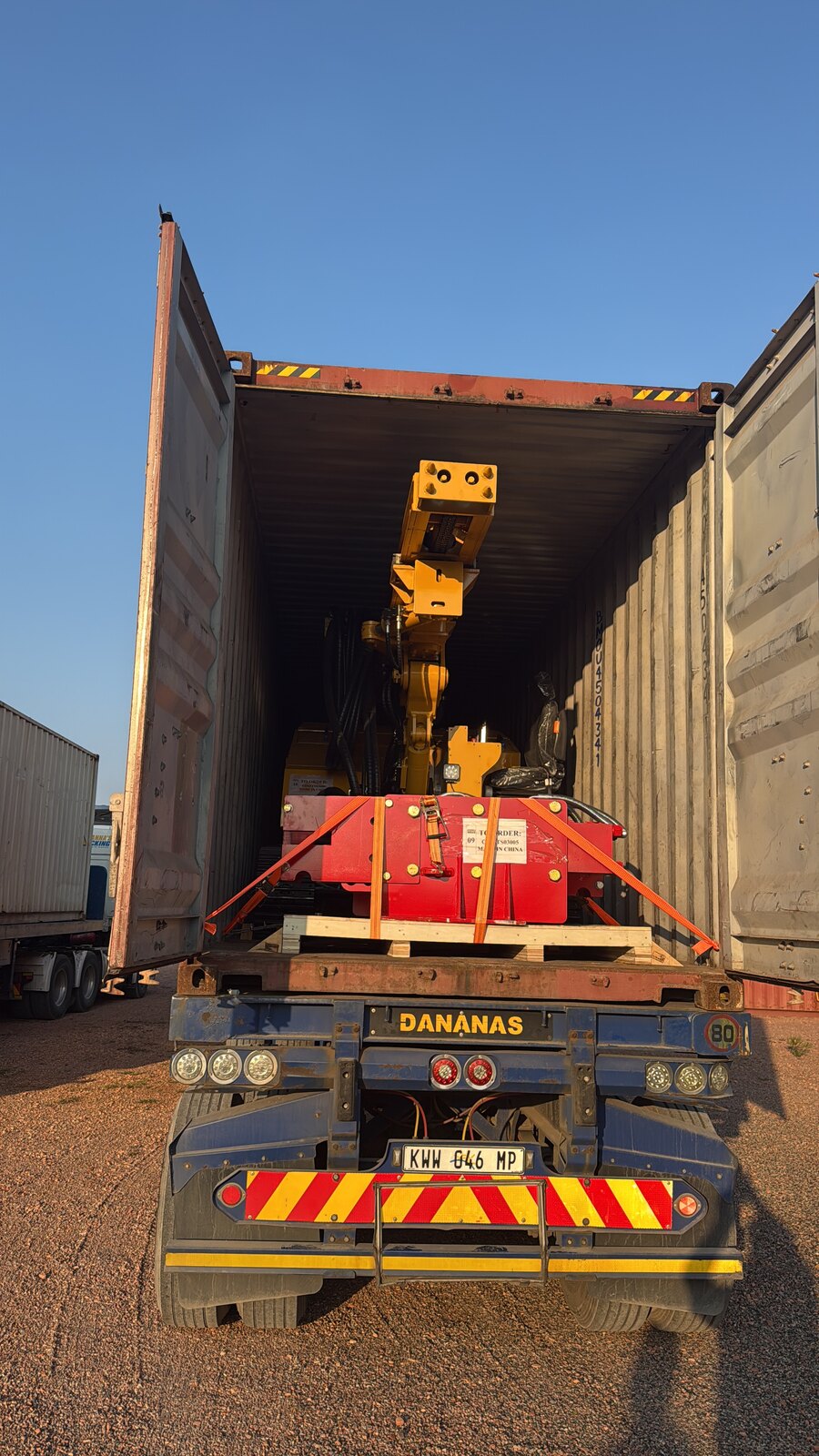
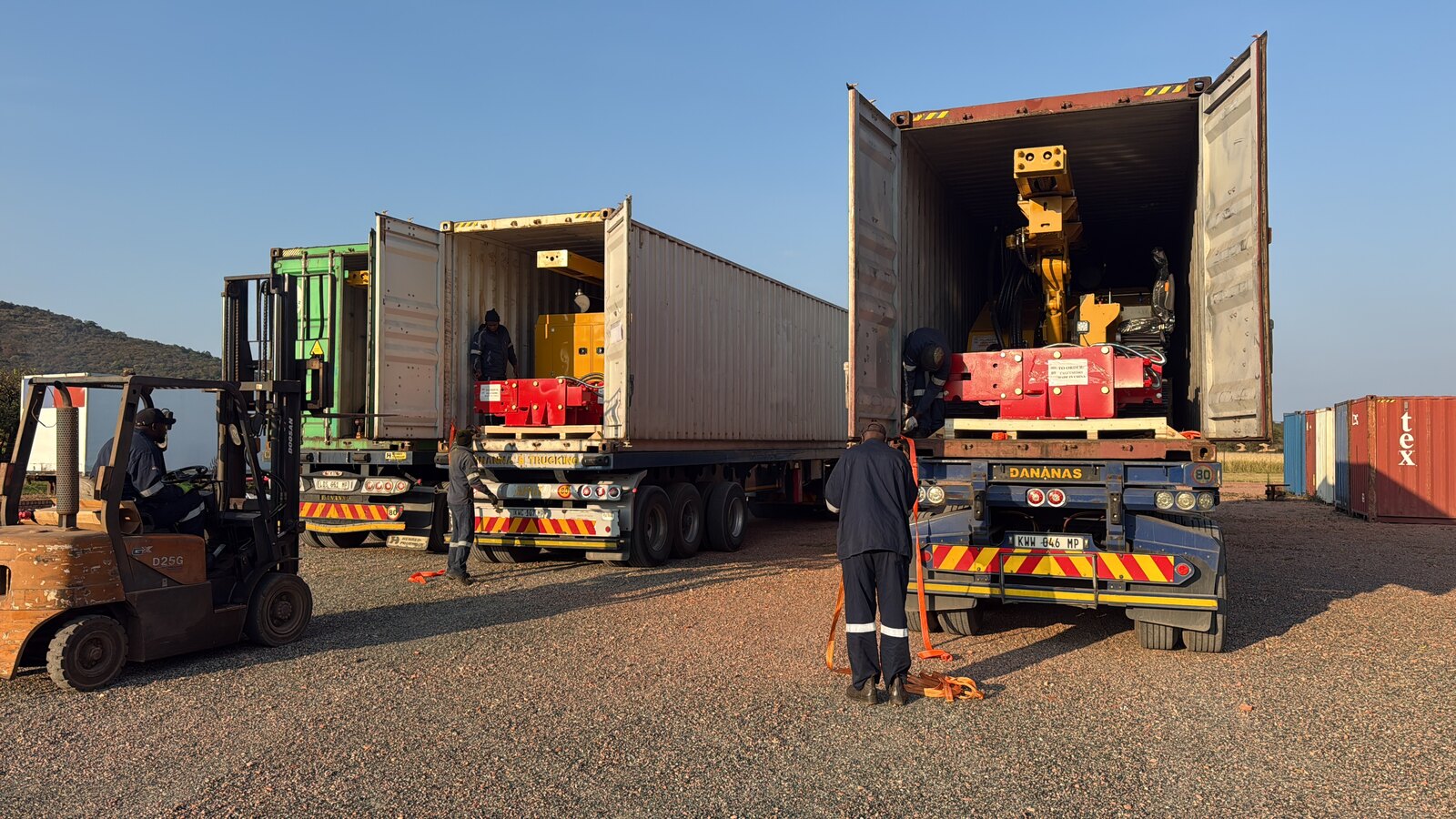
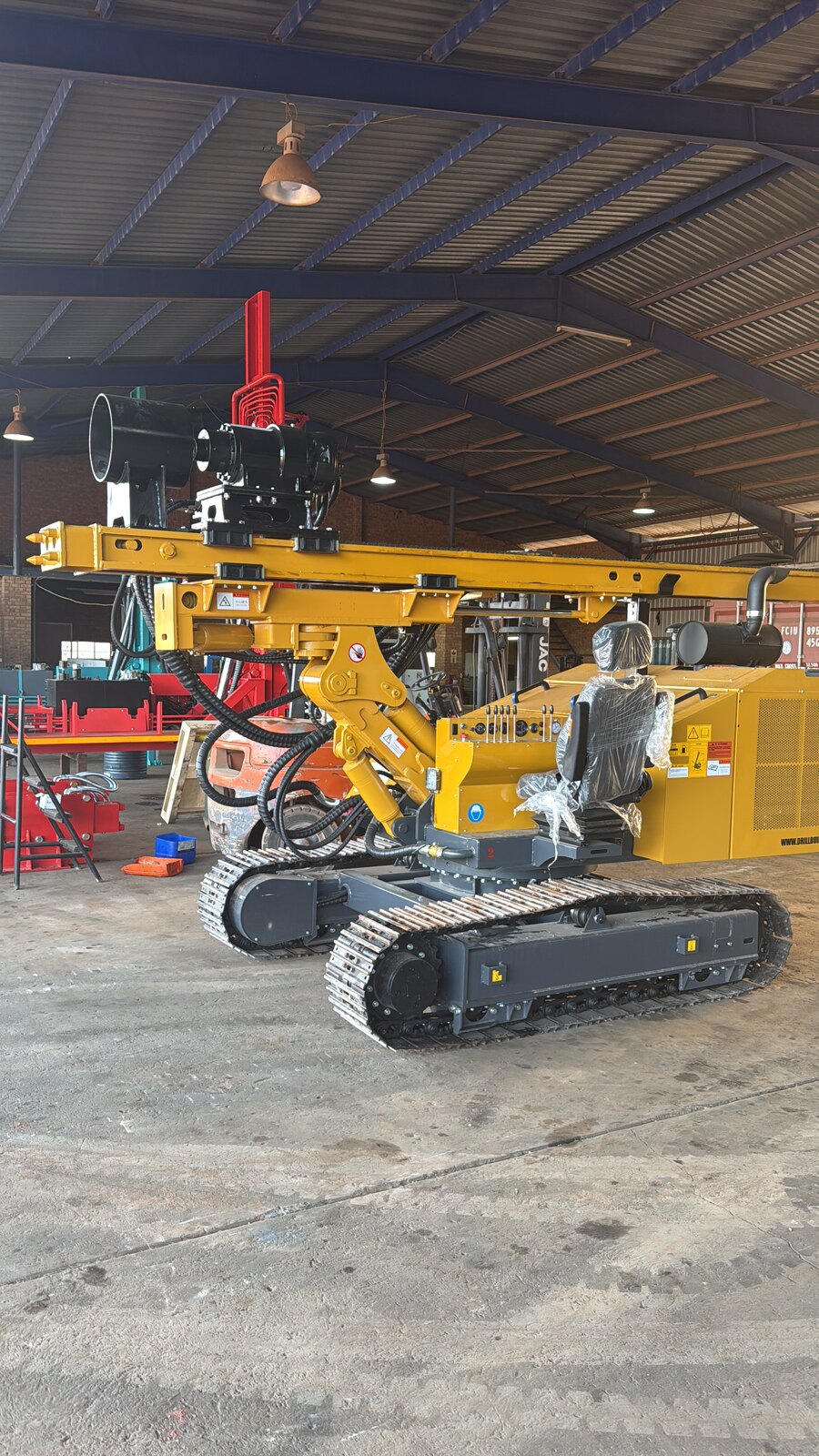
The trucks rolled into the Mokopane yard one after another — six rigs across three containers, packed two to a box and lashed down tight. As-shipped, these were a good base machine — a solid platform on steel tracks. But a good base machine is exactly that: a starting point. We unstrapped them, offloaded them, and lined them up. The real work was about to start.
Into the Workshop
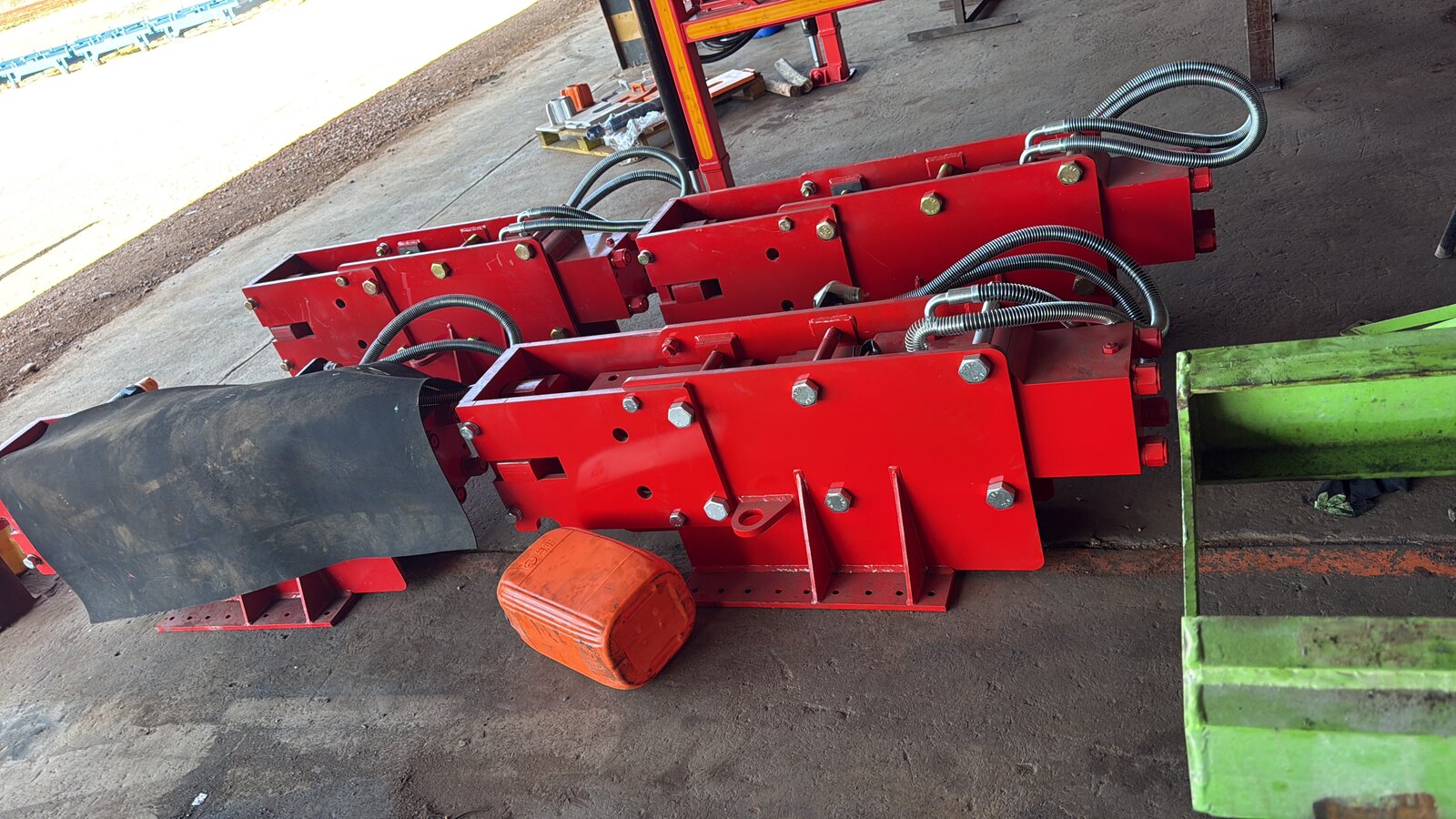
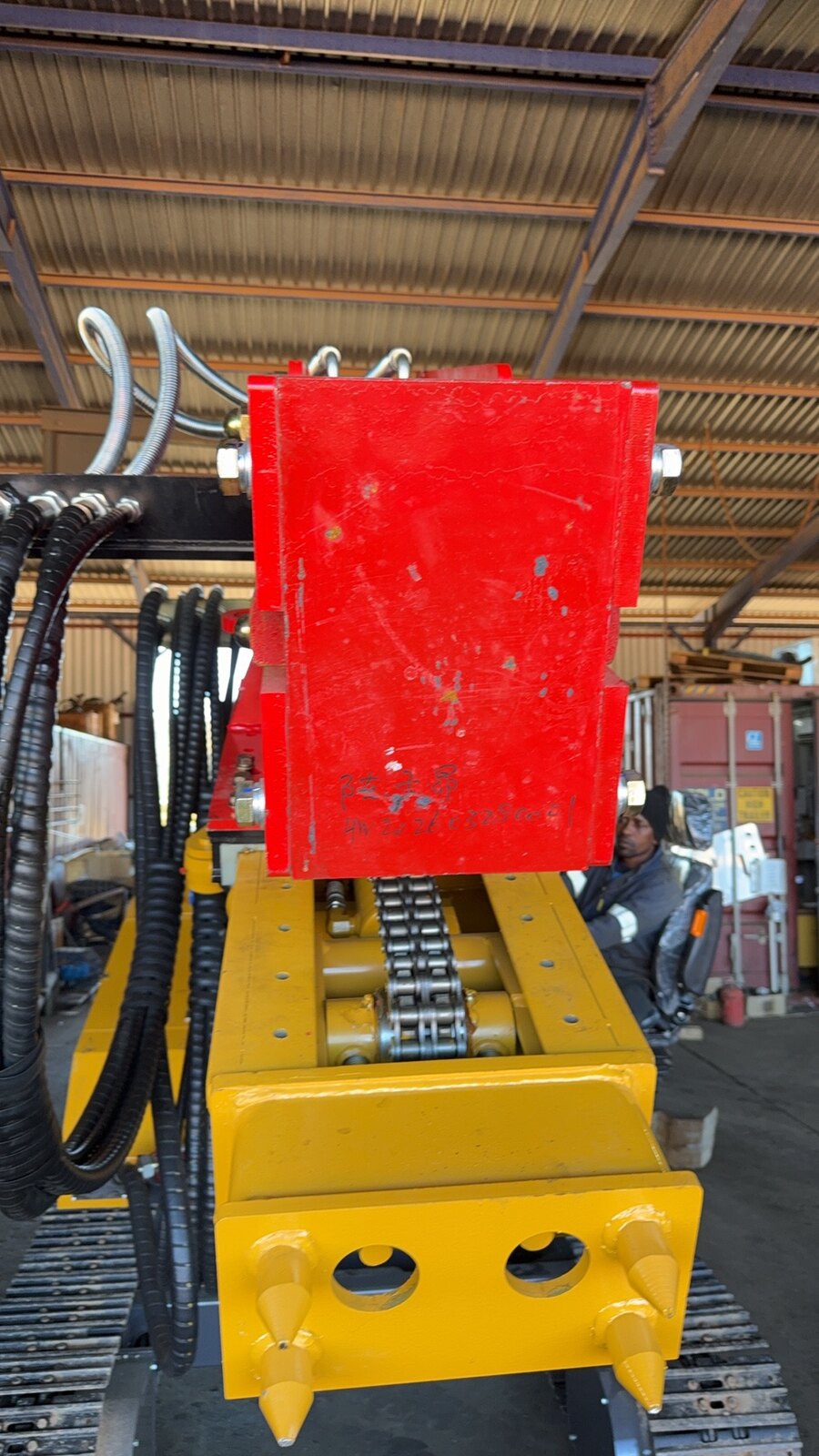
We don't resell rigs as-is. Every unit came apart in our shop — inspected, rebuilt, and repainted in Drillbuilders colours. The power-head feed carriages were stripped right down, the hoses re-run, and everything went back together to our standard, finished in Drillbuilders red. This is where an imported box becomes a Drillbuilders machine.
The Engineering: A Drill Bush We Built Ourselves
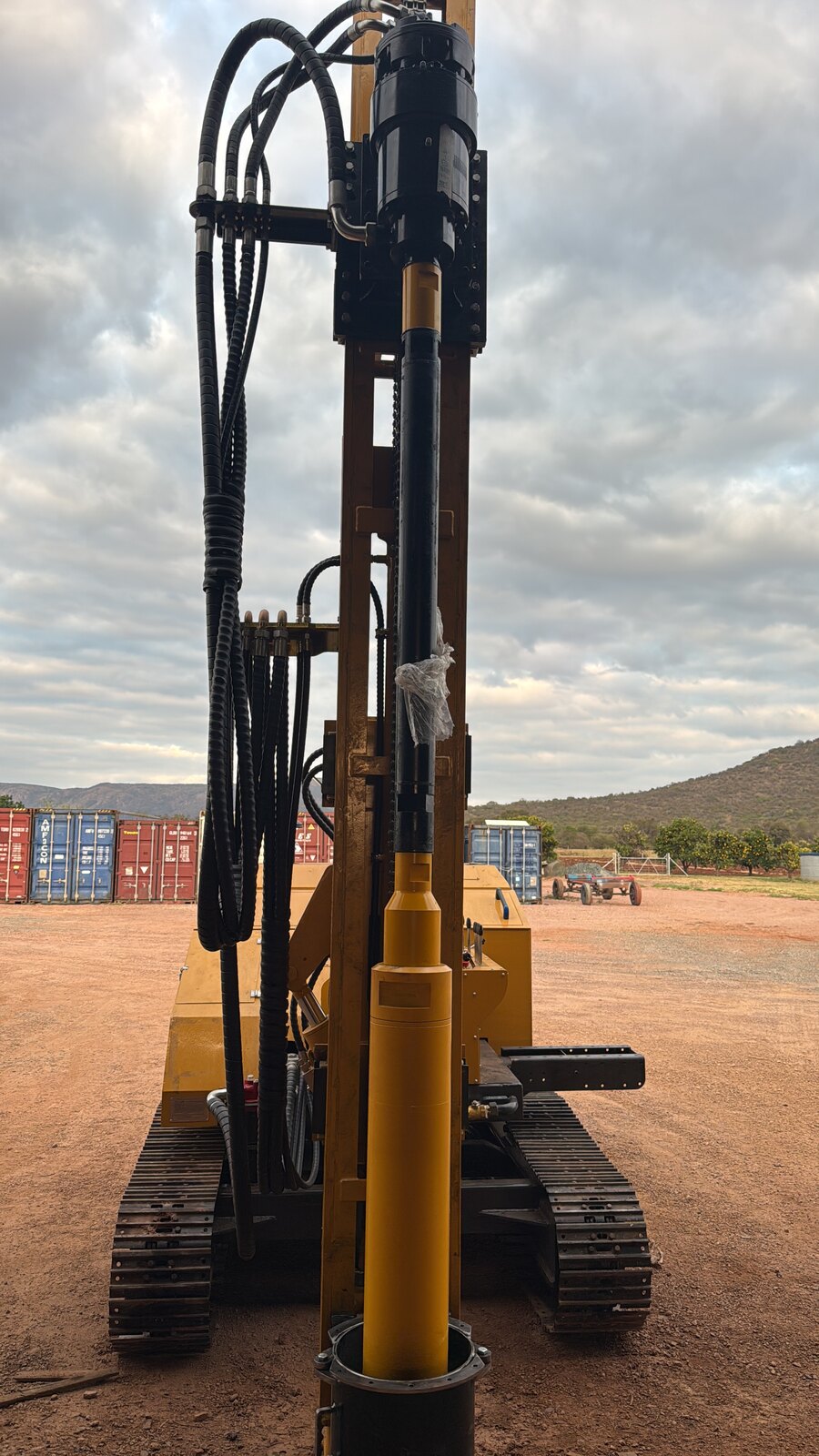
Here's the heart of the job. A solar pile only does its work if it goes in dead-straight. So we built a heavy split-steel guide bush that mounts to the feed and guides the DTH hammer true into the hole — the pile starts true, and it stays true. That's straighter holes, faster work, and longer tool life.
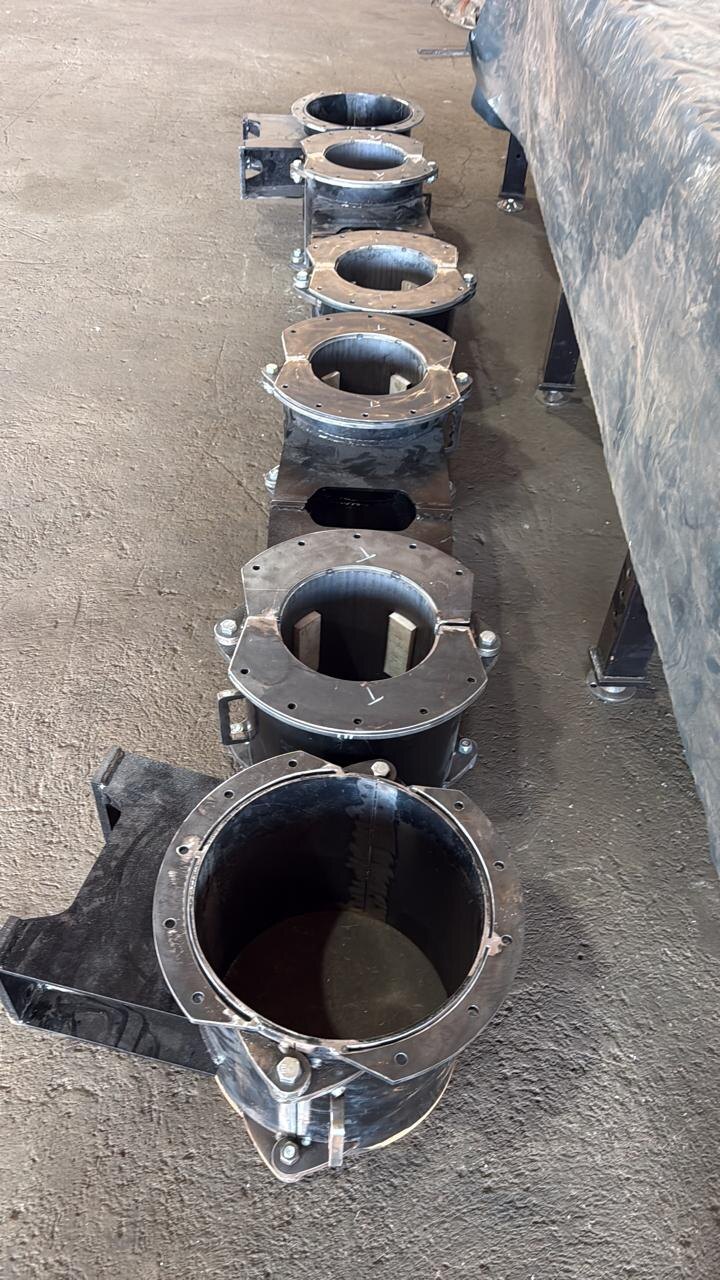
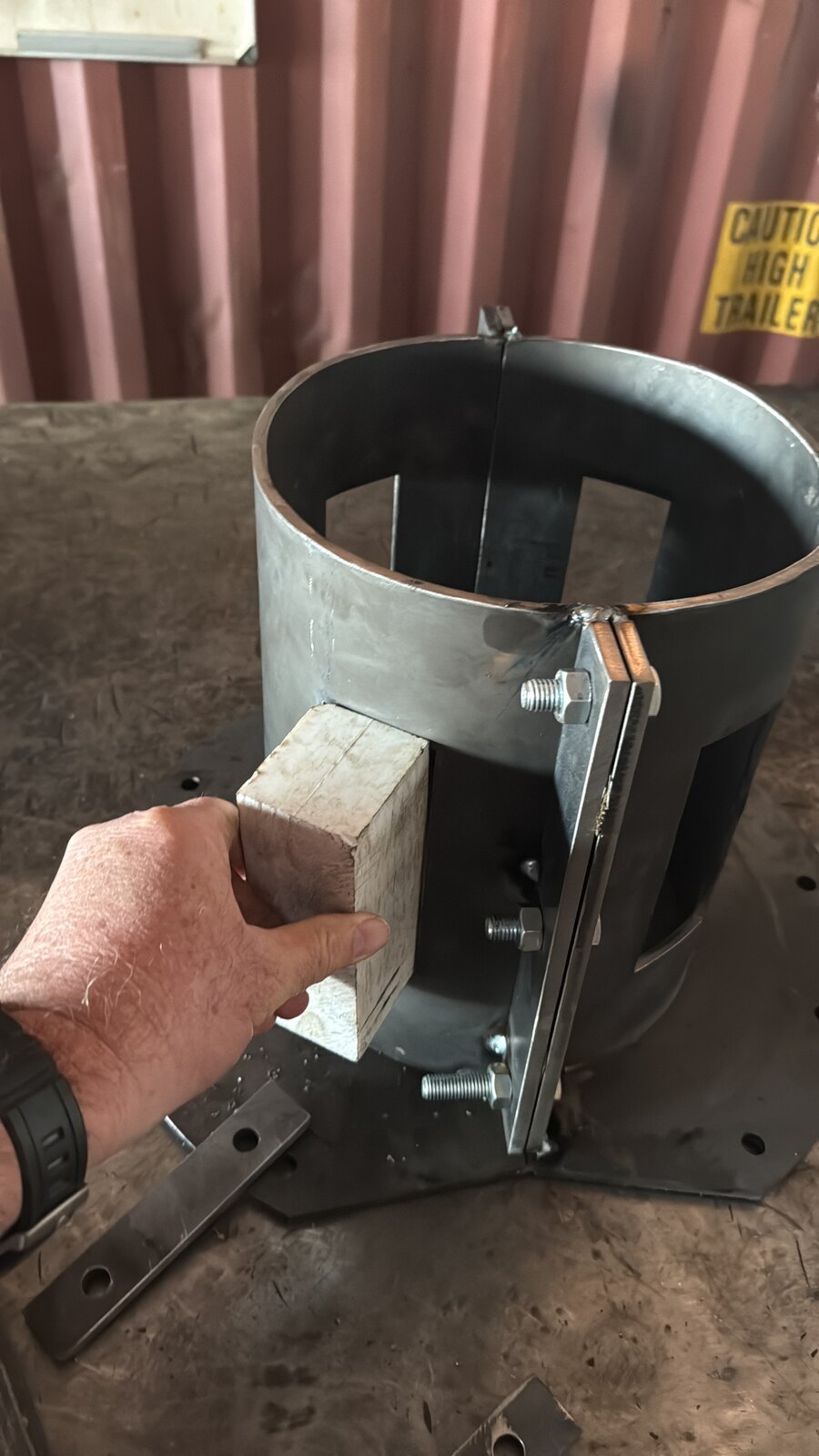
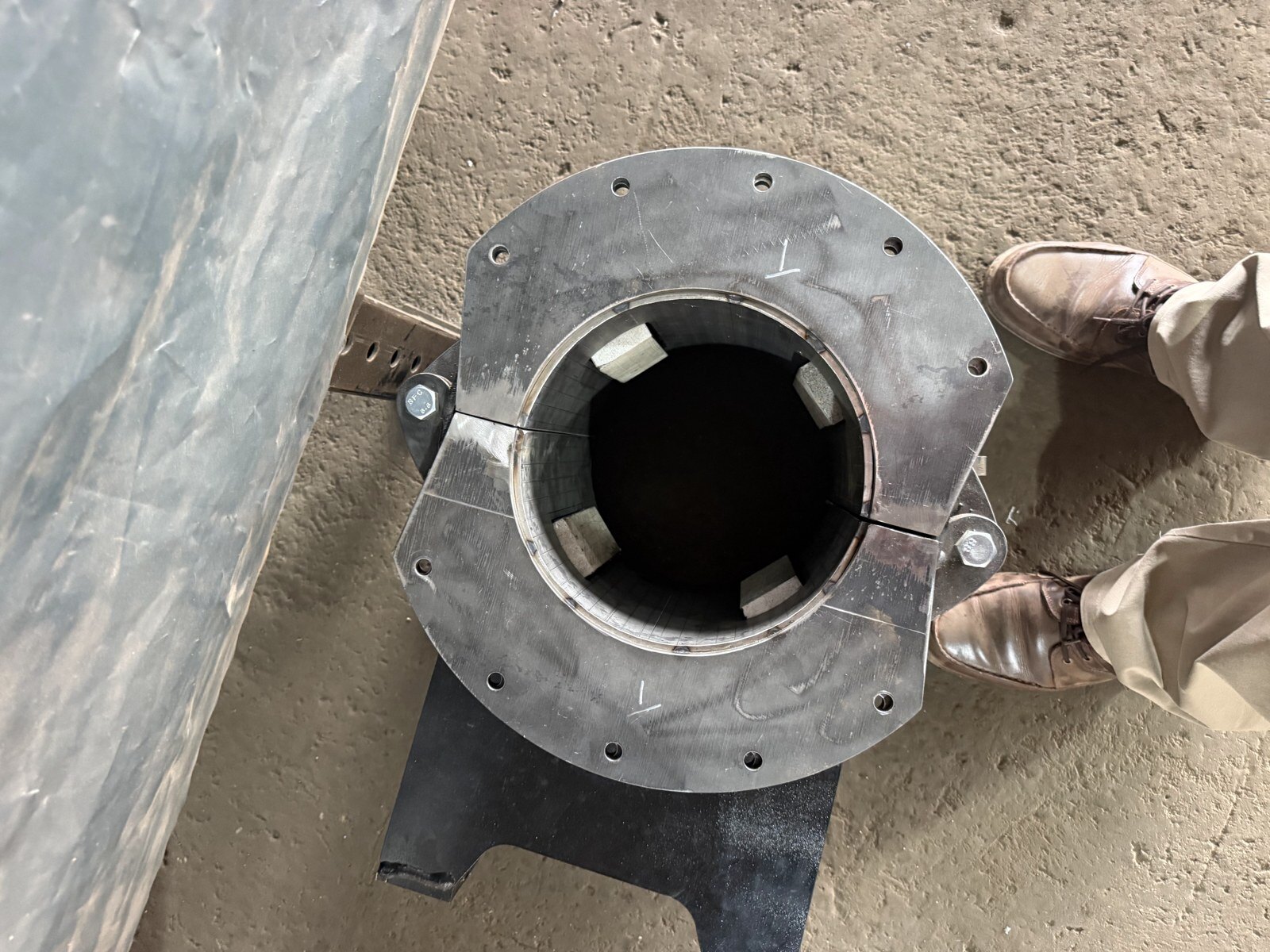
Then we cut it in two and put hinges on it. The bush is split down the middle with hinges, so it opens like a clamshell. You load or change the hammer without stripping the mast — open it, seat the hammer, close it, carry on.
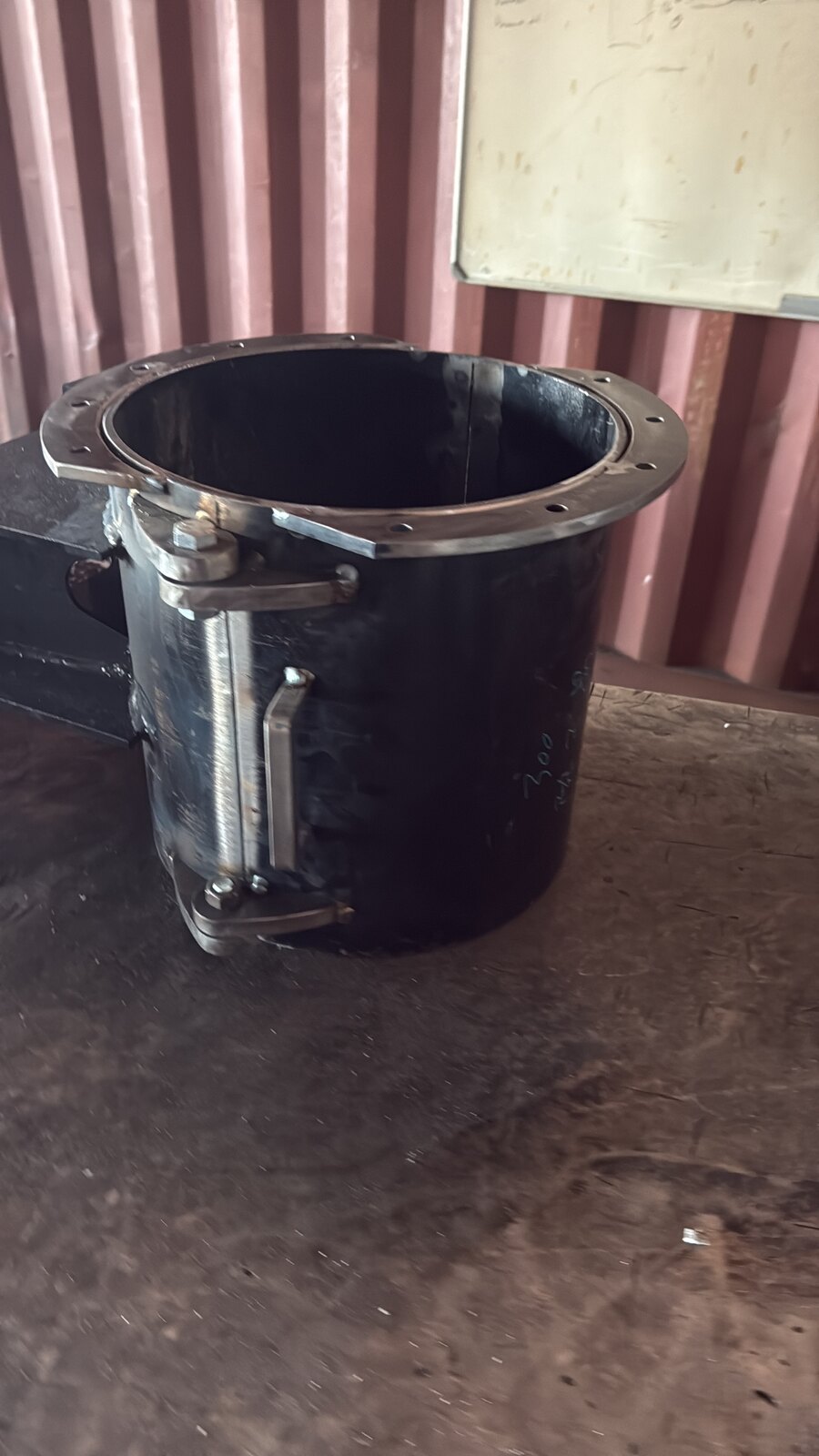
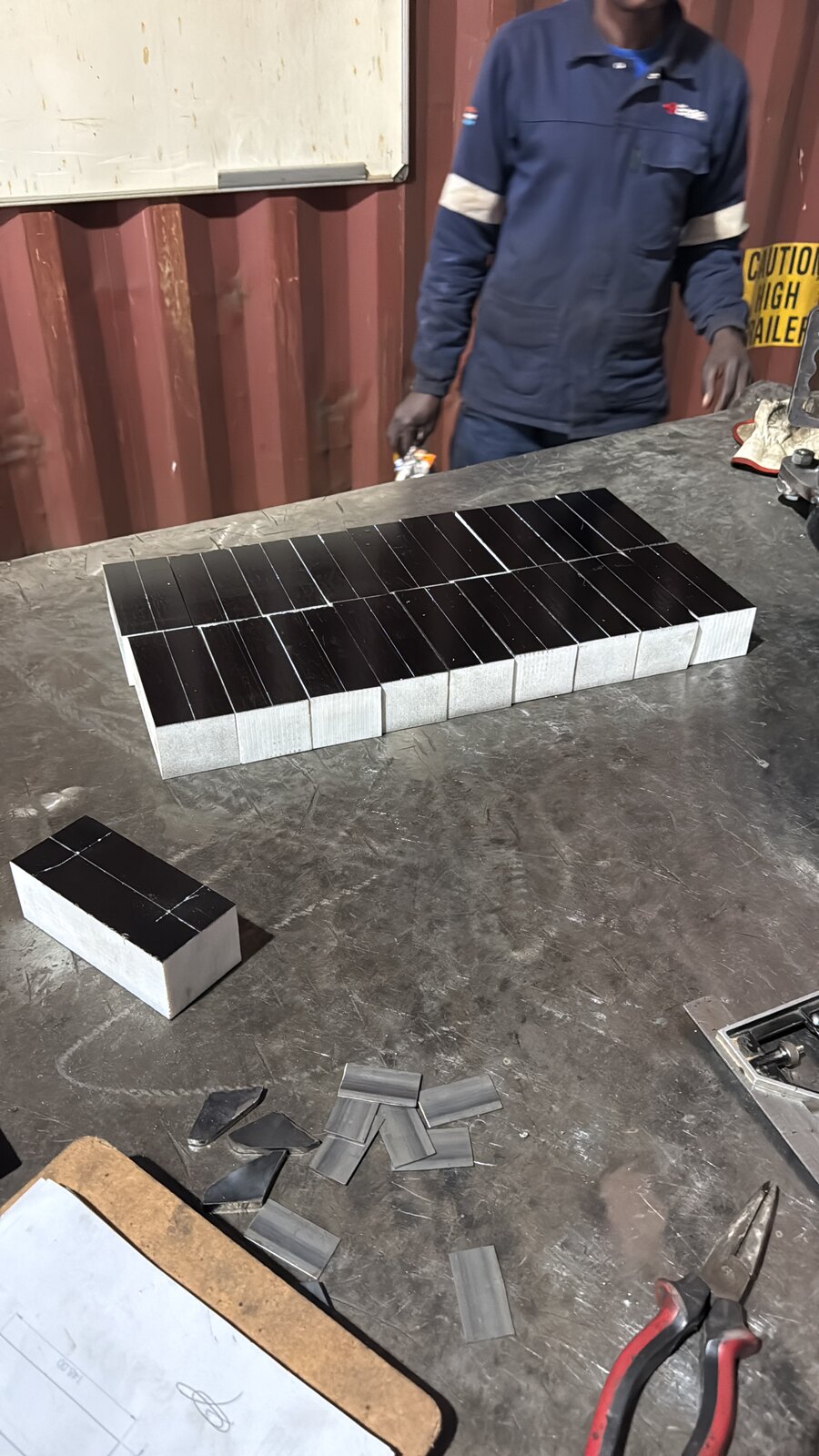
Inside that bush we fitted Ertalyte guide blocks — a hard-wearing, low-friction engineering polymer. They're bolt-adjustable: wind them in or out to take up wear and keep the hammer running true across different rod and hammer sizes. They're replaceable and serviceable right there in the field. No specialist trip back to a workshop to keep your rig running straight.
We Made It the Operator's Machine
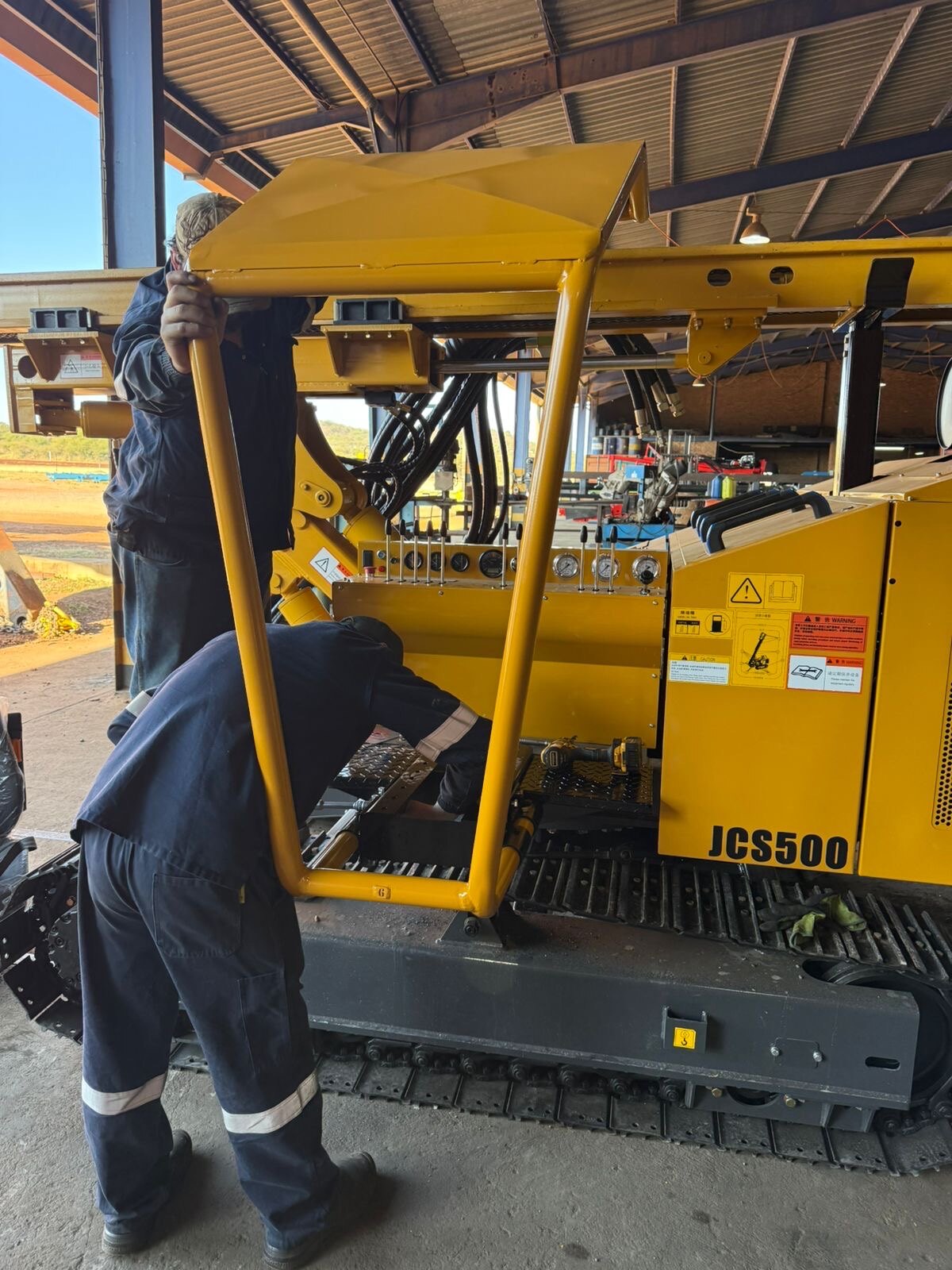
An engineer-built rig is no good if the operator can't run it comfortably all day. So we added two more things. First, a bolt-on seat extension — a bracket that slides the operator seat further back so a bigger operator can sit comfortably at the controls. Second, a fabricated removable sun canopy over the operator station, to keep the Highveld sun off the person doing the work.
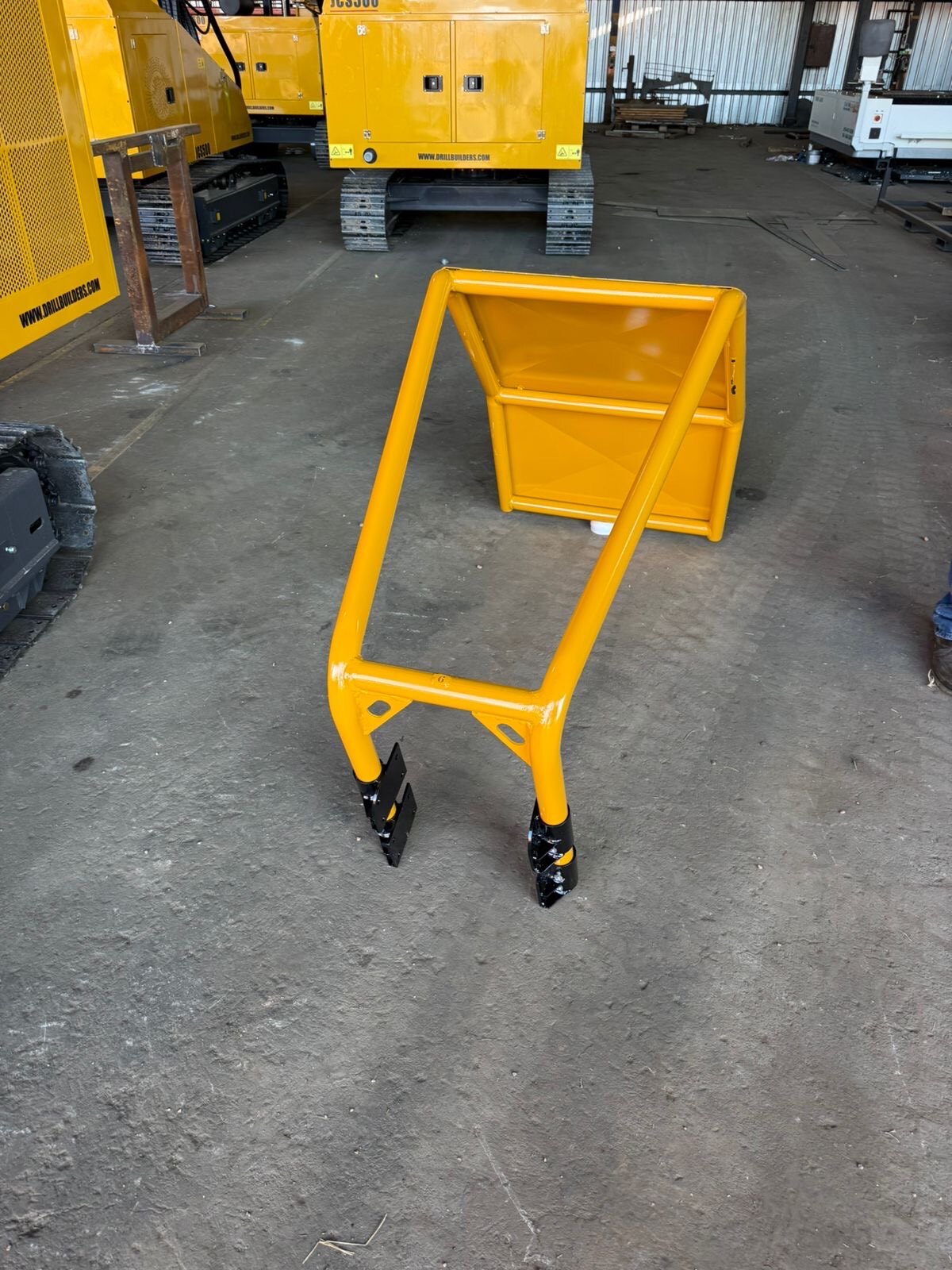
And here's the part that matters when it's time to move. Both the canopy and the seat extension unbolt in minutes, so the rig drops to legal transport height and width — easy to load, ship and offload. Comfort on site, compact on the road. You don't have to choose.
What the JCS500 Can Do Now
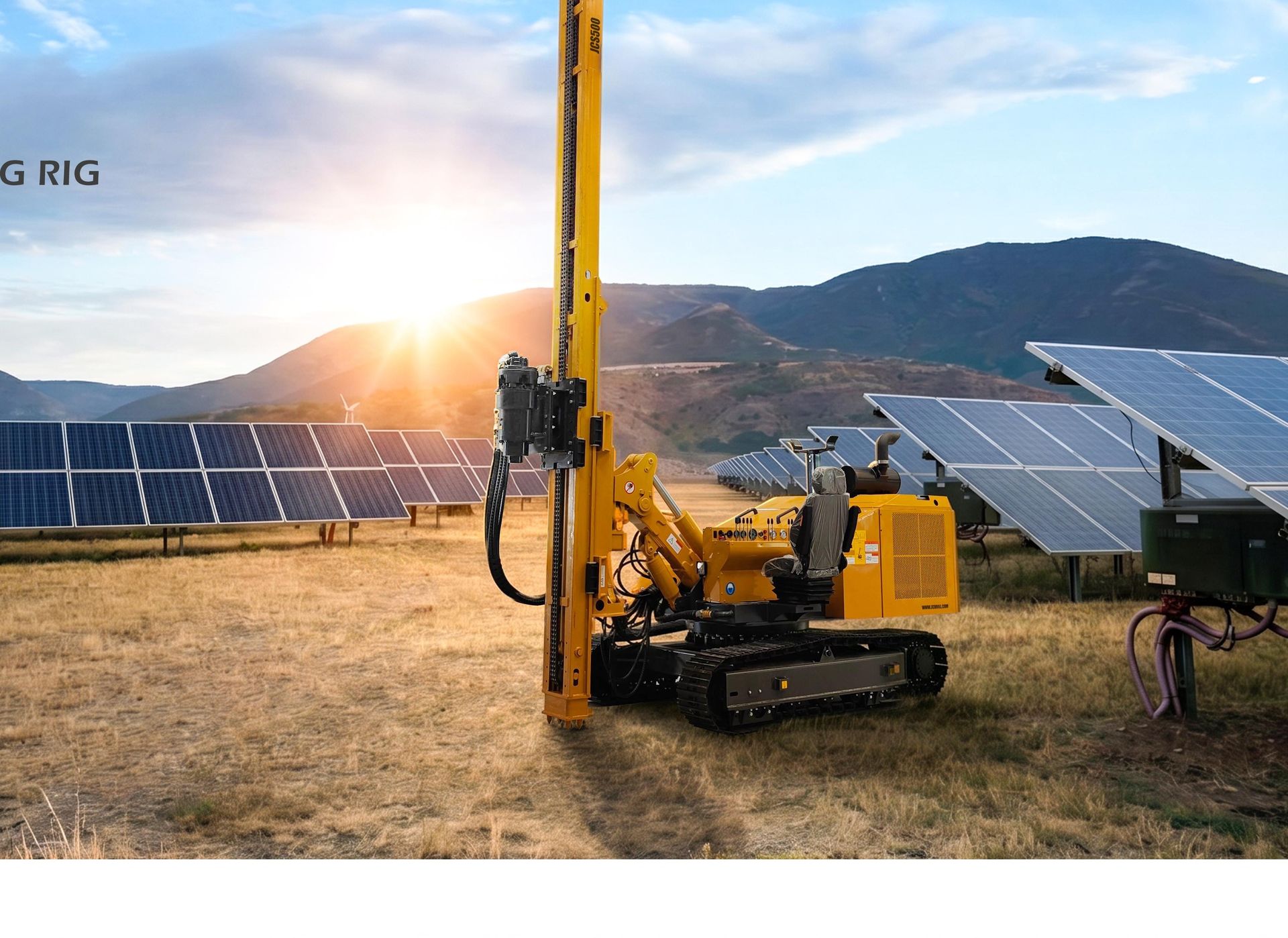
The JCS500 is a solar-foundation drilling rig — auger and DTH — built for pile foundations on solar farms. With the rebuild done, here's what it brings to a site:
- Drilling: auger up to 500 mm diameter; DTH 130–400 mm. Supplied with a 305 × 3000 mm auger.
- Pile holes up to 4 m single depth, with automatic rod-handling to extend reach. Rod diameters 75 / 85 / 100 mm.
- Rotary power-head torque: 8000–12000 N·m.
- Feed: hydraulic slide with a 4100 mm stroke; slider swing ±15°, guide tilt ±5°.
- Engine: Cummins diesel, 85 kW (375 N·m max torque @ 1850 rpm; rated 2600 rpm). 150 L fuel.
- Hydraulics: 19 MPa work pressure, 230 L/min rated flow, 230 L oil tank.
- Undercarriage: 350 mm steel crawler tracks; 3 km/h tramming; climbs 25°; 290 mm ground clearance; 360° rotating chassis; 2030 mm tail swing.
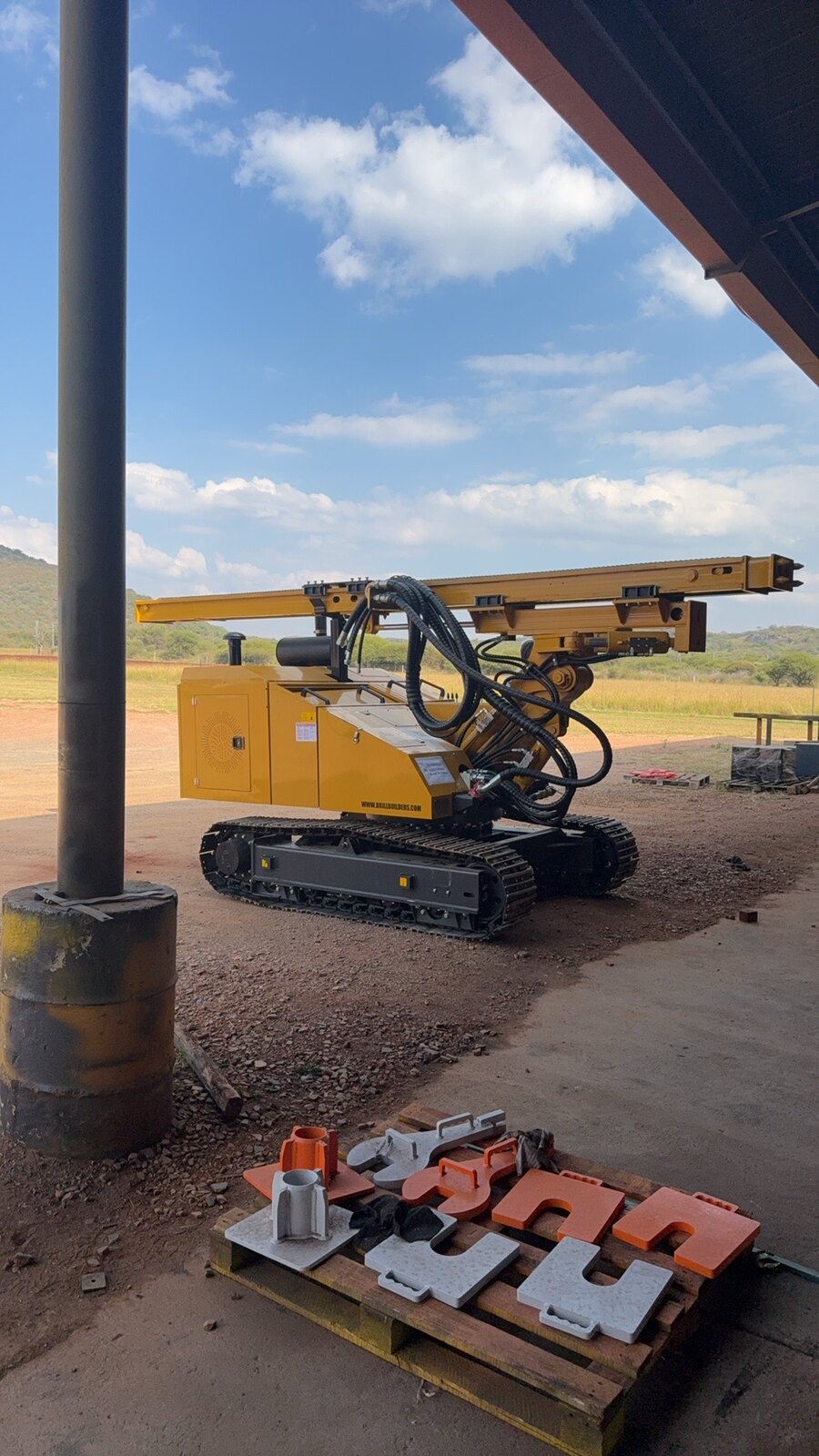
- Weight ~7232 kg. Transport size 5670 × 1980 × 2375 mm (canopy and seat extension unbolt for transport).
What that adds up to on the ground: drilling speed and precision, high torque, real operator comfort and control, terrain adaptability for the soft and uneven ground you find on solar sites, 360° positioning, durability with low maintenance, and a compact, transportable package. A 10″ DTH hammer with 12″ / 305 mm bits is available on request.
Our Own Brochure and Spec Sheet
To finish the job properly, we treated the JCS500 as a Drillbuilders product end to end. We re-shot and cut out the rig photography, stripped all the supplier branding, and produced our own materials: a four-page brochure (JCS500_Catalog_Drillbuilders.pdf) and a one-page spec sheet (JCS500_SpecSheet_Drillbuilders.pdf). Both are attached to the product in our system and available on request.
Want a JCS500 on Your Solar Site?
This is what Drillbuilders does — we take a good machine and make it field-ready for African solar sites. Founded in 1999 and built in Mokopane, we build and improve rigs; we don't just import boxes. If you're piling foundations for a solar farm, talk to us.
Web: www.drillbuilders.com · Email: [email protected]
Phone: +27 010 500 1605 / +27 83 854 2781
Live product page: drillbuilders.com/jcs500